Confessor Amantius is a saint of the Catholic Church. Confessor Amantius's feast day is celebrated on 8 April.
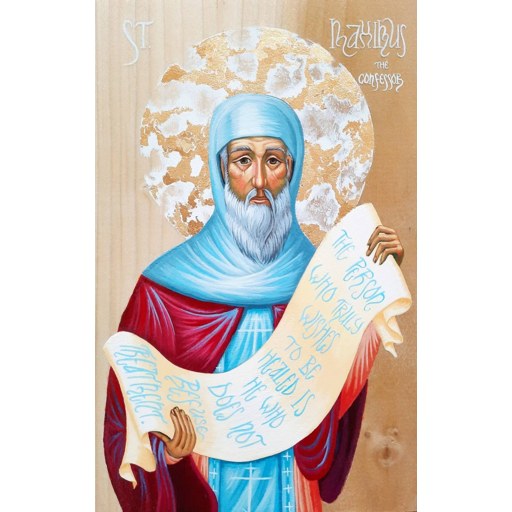
https://etsy.com/listing/1294340881/partly-hand-paintedgilded-st-maximus-the
License: unknown
Confessor Amantius
Saint- Feast Day
- 8 April
- Gender
- male
- Church
- Catholic
Places
Roles & Family
Biography
Saint Amantius, venerated as a confessor in the Western church, is identified in traditional sources as the third bishop of Como in northern Italy during the fifth century. The designation “confessor” in early Christian usage referred to a holy person who had given witness to the faith through a life of virtue and pastoral service rather than through martyrdom. Contemporary documentary evidence for Amantius is extremely limited; what is known derives chiefly from later episcopal catalogues of the diocese of Como, liturgical martyrologies, and medieval hagiographical accounts that mix historical memory with legendary elements typical of the period.
The diocese of Como had been established toward the end of the fourth century. Its first bishop, Felix, is associated with the circle of Ambrose of Milan. Amantius is listed as Felix’s second successor, after Provincialis. He lived and exercised his ministry in a region still marked by the structures of the late Roman Empire but already experiencing the political and military pressures that accompanied the fifth-century transformations of Italy. Later tradition credits him with the construction of a basilica dedicated to the apostles Peter and Paul, located outside the city walls of Como. This church became an important cult site and was subsequently linked with his successor, Saint Abundius.
Precise dates for Amantius’s birth and the length of his episcopate cannot be verified from independent historical records. Hagiographical tradition places his death in the middle of the fifth century, often specifying the year 448, and locates it at Como. He was buried in the basilica he is said to have founded. His cult remained primarily local. The Roman Martyrology commemorates him on 8 April. Relics attributed to him have been preserved and venerated in Como. No contemporary vita survives, and later lives add miracle stories and biographical details, including an unconfirmed claim of British origin, that lack corroboration from reliable fifth-century sources.
Amantius must be distinguished from other saints of the same name who were also styled confessors, including Amantius (Amans), regarded as the first bishop of Rodez in Gaul in the later fifth century, and a priest Amantius associated with Città di Castello. The scarcity of early evidence means that many particulars of his life remain unknown. He is remembered principally as an early pastor of the church of Como whose memory was kept alive in the local liturgical calendar and in the succession lists of the bishops of that see.