Confessor Bruno is a saint of the Catholic Church (d. 1101). Confessor Bruno's feast day is celebrated on 6 October. Confessor Bruno is the patron saint of Carthusian Order;Calabria;those suffering demonic possession.
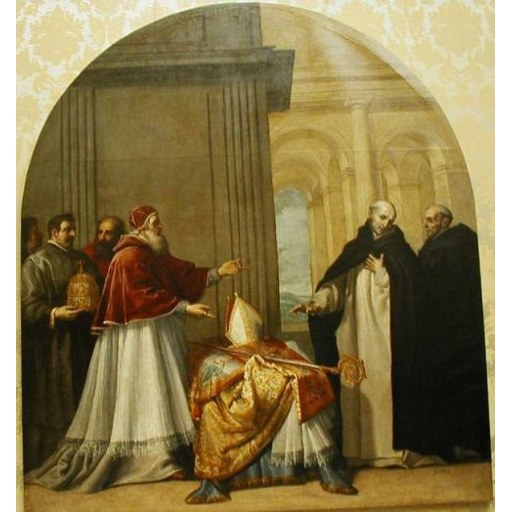
https://nobility.org/2013/10/03/st-bruno
License: unknown
Confessor Bruno
Saint- Life Span
- d. 1101
- Feast Day
- 6 October
- Gender
- male
- Church
- Catholic
Places
Roles & Family
Religious Information
Patronage
Carthusian Order;Calabria;those suffering demonic possession
Biography
Saint Bruno of Cologne, founder of the Carthusian Order and the figure commonly intended by the liturgical title Confessor Bruno, was born in Cologne in the early eleventh century (traditionally about 1030) to a family of standing in that city. He was educated first at the cathedral school of Cologne and then at Reims, then one of the chief schools of the West. Ordained priest, he became a canon of Reims cathedral, master of its school, and chancellor of the archdiocese, offices he held for many years. He was known for learning, personal austerity, and opposition to simony. In the conflict over Archbishop Manasses I of Reims, who was suspended and later deposed around 1080, Bruno stood with the reformers; he was mentioned as a possible successor to the see but did not accept it.
Desiring a stricter life, he left Reims about 1080–1081. After a short stay associated with Robert of Molesme, he sought a more eremitical solitude. In 1084, with six companions and the support of Bishop Hugh of Grenoble, he settled in the remote Chartreuse massif in the Alps. The hermitage they built became the Grande Chartreuse. The observance Bruno shaped there joined hermit solitude to limited common liturgy: each monk had a cell and garden, gathering for the night office and conventual Mass, under silence, copying of books, manual work, and a sparse diet. That pattern became the Carthusian life.
In 1090 Pope Urban II, who had known him at Reims, summoned Bruno to the papal court as an adviser. He left Chartreuse, which continued under Landuin. In Italy he refused episcopal office, including, in Carthusian tradition, the see of Reggio in Calabria. With papal leave he withdrew to the wooded Serre of Calabria, in the region of Squillace, and founded a second hermitage, Santa Maria della Torre. He remained there as head of a small community, keeping the same discipline and corresponding with friends in France, until his death.
Bruno died on 6 October 1101 at Santa Maria della Torre and was buried at that hermitage. Two letters of his survive, one to Raoul le Verd of Reims and one to the monks of Chartreuse, and they show his mind on vocation and perseverance in solitude. He was never the object of a formal medieval papal canonization; in 1514 Pope Leo X allowed the Carthusians to keep his feast, and in the seventeenth century 6 October was extended in the Roman calendar. He is venerated as founder of the Carthusians and as a patron of Calabria. Relics associated with him are kept at the later Charterhouse of Serra San Bruno, the settlement that grew near his Calabrian foundation.