Confessor Constantine is a saint of the Catholic Church.
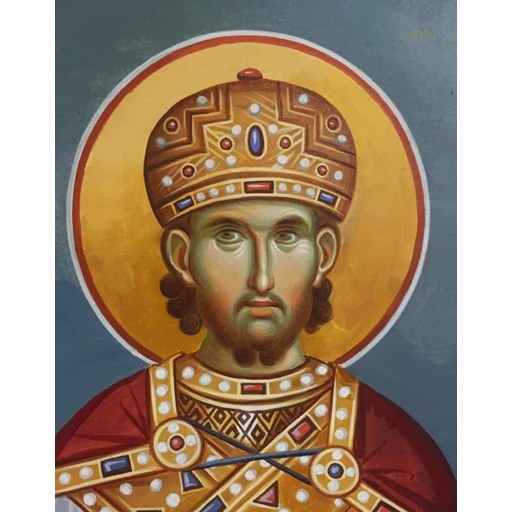
https://pinterest.com/ideas/saint-constantine-icon/948823817258
License: unknown
Confessor Constantine
Saint- Gender
- male
- Church
- Catholic
Roles & Family
Biography
The designation Confessor Constantine does not correspond to a single, unambiguously documented historical individual in the principal martyrologies and synaxaria. The title Confessor was given in both East and West to Christians who had suffered imprisonment, exile, or torture for the faith without dying as martyrs, and in some later Western usage it simply distinguished a male saint who was not a martyr. Several men named Constantine received this or a similar designation, and the sources that mention them are separated by geography and century. In the absence of a feast day, a see, or another unique identifier, no single year of birth, place of birth, or place of death can be verified from a reliable historical source, and fields that require such precision are therefore left blank.
One Eastern candidate is the monk traditionally called Constantine of Synnada, commemorated in some Orthodox calendars in late December. According to the synaxarion accounts, he was born of a Jewish family in the Phrygian city of Synnada in Asia Minor, converted to Christianity after encountering the Gospel, received baptism, and entered monastic life, living at more than one monastery in Bithynia and elsewhere. The same accounts credit him with extreme fasting, prolonged standing in prayer, the gifts of wonderworking and clairvoyance, and a peaceful death in old age, perhaps in the eighth or ninth century. These narratives are late and hagiographical; they do not rest on contemporary charters or chronicles, and it is not even certain that this Constantine suffered the kind of persecution that would strictly earn the title Confessor rather than the more usual monastic title Venerable.
A Western candidate is the sixth-century ruler of Dumnonia in south-western Britain, or of a northern British kingdom, who according to later legend abdicated, became a monk, and was remembered in Cornwall, Ireland, and Scotland. Gildas, writing in the mid-sixth century, had already named a Constantine of Dumnonia as a violent tyrant; subsequent hagiography either recast that figure as a penitent or attached the name to a different convert-king who was tonsured by Saint Petroc, laboured in an Irish monastery, and ended his life in Scotland, either as founder of the church at Govan or as a victim of pagan raiders. Feast days of 9 March and 11 March appear in Cornish and Scottish calendars. Modern historians treat the Insular Constantines as possibly several persons whose stories have been merged, and no birth year, death year, or burial place can be confirmed from sources independent of the medieval legend.
Other local commemorations of a Constantine styled confessor occur in medieval calendars, yet they likewise supply no independently verifiable biography. None of the principal candidates is known to have occupied the bishopric of Rome or an Eastern patriarchate. Whether any of them was married or had children before entering religion cannot be established from reliable evidence. Formal papal canonization or beatification, in the later medieval and modern sense, does not apply to these early figures, whose cults arose by popular acclamation and local liturgical use. The present record therefore confines itself to what can be stated with caution and leaves every unverified particular empty.