Confessor Eulogius is a saint of the Catholic Church (d. 608). Confessor Eulogius's feast day is celebrated on 13 September.
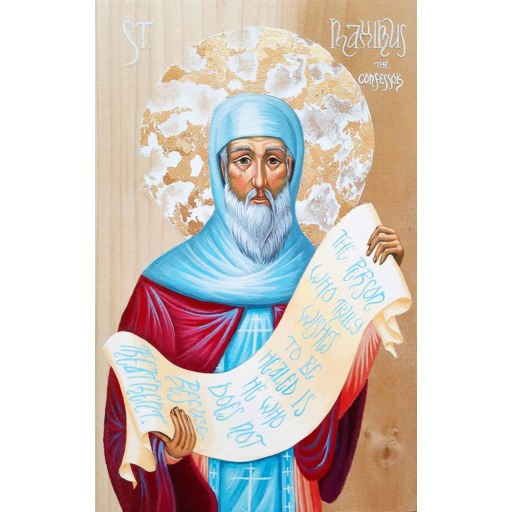
https://etsy.com/listing/1294340881/partly-hand-paintedgilded-st-maximus-the
License: unknown
Confessor Eulogius
Saint- Life Span
- d. 608
- Feast Day
- 13 September
- Gender
- male
- Church
- Catholic
Places
Roles & Family
Biography
Saint Eulogius of Alexandria was a late sixth- and early seventh-century Chalcedonian patriarch of Alexandria, commemorated in the Latin martyrological tradition as a bishop and confessor. He was of Syrian origin and spent his early religious life as a monk of a monastery dedicated to the Mother of God in the region of Antioch, where he became known for ascetic discipline and theological learning. From that community he entered the service of the Church of Antioch as syncellus, a senior aide to the patriarch, before being chosen around 580 to occupy the Chalcedonian see of Alexandria. Egypt in his lifetime was predominantly Miaphysite; the imperial, Chalcedonian patriarchate (later called Melkite) therefore shepherded a minority flock that looked to Constantinople and Rome, and Eulogius’s long tenure was spent governing that community under constant doctrinal and pastoral pressure.
As patriarch he preached, administered, and wrote against the anti-Chalcedonian parties then active in Egypt, including the Theodosians (Severan Miaphysites) and the Gaianites (a Julianist or aphthartodocetic group), as well as against remaining Novatianists. Photius of Constantinople, who in the ninth century still had access to several of Eulogius’s books, summarized treatises against those groups, sermons, and a work on the Trinity and the Incarnation. Eulogius defended the two natures of Christ united in one person according to the Council of Chalcedon (451) and the Tome of Pope Leo, while trying to hold together a divided Egyptian church. Almost all of his writings are lost except for the excerpts and descriptions preserved by Photius, so his theology is known chiefly at second hand.
His best-documented relationship is the friendship and correspondence he maintained with Pope Gregory the Great. Gregory’s surviving letters to Eulogius, from the late 590s and early 600s, discuss doctrine, the aftermath of the Three Chapters controversy, the title of ecumenical patriarch then used at Constantinople, and gifts of relics and books. Gregory praised Eulogius’s defense of Roman teaching and sent him filings from the chains of Saint Peter together with a relic associated with Saint John the Evangelist; Eulogius in return sent Gregory a treatise on the orthodox faith. The letters show two senior Chalcedonian bishops coordinating across the Mediterranean against both Egyptian Miaphysitism and lingering disputes over sixth-century imperial church policy.
Eulogius died in Alexandria in 607 or 608, after a patriarchate of about twenty-seven years, and was succeeded by Theodore. He was venerated as a saint from an early date without a later papal bull of canonization; his cult is of the ancient, pre-congregational kind. The Roman Martyrology keeps his feast on 13 September, styling him bishop and confessor; Byzantine calendars commemorate him on 13 February. No well-attested medieval or modern patronages of particular places, trades, or illnesses are recorded in the principal hagiographical collections.