Confessor Euphronius is a saint of the Catholic Church. Confessor Euphronius's feast day is celebrated on August 3.
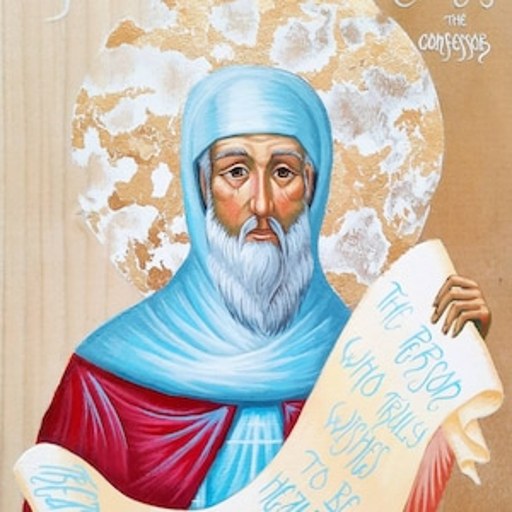
https://www.etsy.com/market/saint_maximus_the_confessor_icon
License: unknown
Confessor Euphronius
Saint- Feast Day
- August 3
- Gender
- male
- Church
- Catholic
Roles & Family
Biography
Saint Euphronius, commemorated in the Western martyrological tradition as a bishop and confessor, was bishop of Autun (Augustodunum) in Roman Gaul during the fifth century. Autun, in the region that is now Burgundy in France, was an old Gallo-Roman civic and ecclesiastical centre. Almost nothing can be established about his birth, family, education, or the date and circumstances of his elevation to the see. No contemporary vita survives. The notices that can be used with any confidence come from the correspondence of his contemporary Sidonius Apollinaris and from the later Roman Martyrology, which lists him on 3 August as bishop and confessor of Autun. Later hagiographical expansions are not independently verifiable and should not be treated as biographical fact.
Sidonius Apollinaris, the Gallo-Roman aristocrat, poet, and bishop of Clermont (c. 430–489), counted Euphronius among the respected prelates of Gaul and addressed him with honour. In the later fifth century, as imperial administration receded in the West and Burgundian and other barbarian powers took hold in eastern Gaul, bishops frequently acted as civic as well as pastoral leaders. Euphronius belonged to that generation of Gallic bishops who maintained Catholic orthodoxy, episcopal order, and the cult of local martyrs through a period of political fragmentation. He is associated in tradition with the cult of Saint Symphorian, the early martyr of Autun: later accounts credit him with identifying or honouring the martyr’s tomb and with the building or embellishment of a church in Symphorian’s name. That association is consistent with the well-attested fifth-century pattern of episcopal promotion of local martyr cults, but the precise archaeological and documentary details of any such building campaign are not securely recoverable from surviving sources.
Euphronius is also placed by later writers among the bishops who took part in the conciliar life of the Gallic church in the later fifth century, a period in which councils addressed both doctrine and discipline. The exact year of his death is not established; martyrological and secondary notices offer conflicting dates in the 470s and do not rest on a single contemporary record. He was remembered not as a martyr but as a confessor—that is, as a holy bishop who bore public witness to the faith without dying by violence. His feast on 3 August in the Roman Martyrology is the principal liturgical trace of his cult. Place of death and burial are not independently documented, though Autun, as his see, is the natural presumption of later tradition rather than a proven fact.
Because the dossier is so thin, a responsible account must remain within these limits. Euphronius cannot be given a verified birth year, a verified death year, a birthplace, a religious order, a spouse, or children; none of those items is attested in a reliable historical source. What can be said is that he was a fifth-century bishop of Autun, known to Sidonius, linked by tradition to the cult of Saint Symphorian, and commemorated in the Latin church as a confessor. His memory belongs to the wider history of the Gallic episcopate in the century of the empire’s collapse in the West, when the holiness of a bishop was often expressed in the language of confession rather than of martyrdom, and when the documentary record for even a named saint is often no more than a letter, a martyrological line, and a local cult.