Confessor Evodius is a saint of the Catholic Church. Confessor Evodius's feast day is celebrated on 6 May.
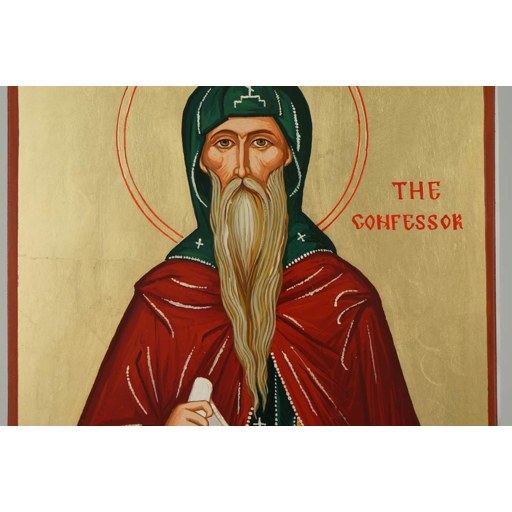
https://blessedmart.com/shop/hand-painted-icons/male-saints-icons/saint-maximus-the-confessor
License: unknown
Confessor Evodius
Saint- Feast Day
- 6 May
- Gender
- male
- Church
- Catholic
Places
Roles & Family
Biography
Evodius, also spelled Evodios or Euodius, is an early Christian figure associated with the church of Antioch in the Roman province of Syria in the first century. The principal historical notice of him comes from Eusebius of Caesarea, who in his Ecclesiastical History records that Evodius was bishop of Antioch and that Ignatius of Antioch was his successor. Later ecclesiastical tradition, especially in the East, numbered him among the Seventy Apostles mentioned in the Gospel of Luke and presented him as having been appointed to the Antiochene see by the Apostle Peter. Those claims belong to subsequent church tradition rather than to any document from Evodius’s own lifetime, and no writing that can be securely attributed to him has survived.
Almost nothing can be established about his birth, family, or early career. Hagiographical narratives describe him as a former pagan who accepted the Christian faith and became a companion of the apostles, but they give no verifiable place or date of birth. Antiochene tradition links him with the period in which the disciples were first called Christians, as recorded in the Acts of the Apostles; some later writers even ascribe to Evodius himself the introduction of that name. Such statements cannot be confirmed from first-century sources. He is remembered as a bishop of the apostolic age, not as a member of any later monastic or religious order. No reliable evidence records whether he was married or had children.
Accounts of his death diverge. The Roman Martyrology commemorates him as a martyr who suffered at Antioch, and some Western traditions connect his death with the persecution under Nero. Certain Eastern synaxaria, by contrast, speak of a peaceful end. The designation Confessor attached to his name in some listings may reflect Eastern usage, in which that title can denote a holy bishop who bore witness to the faith, or it may reflect the tradition that he died in peace rather than by violence. No contemporary record fixes the year of his death. Chronologies that place it in the 60s of the first century rest on inferences from the episcopal succession and from the date of the Neronian persecution, not on a documented obituary. His burial place is not identified in the early sources.
Veneration of Evodius is ancient and belongs to the pre-congregational era of the Church; there is no known papal decree of beatification or canonization. In the Roman calendar he is commemorated on 6 May. In the Byzantine tradition he is remembered on 7 September together with the Apostle Onesiphorus, and additional local commemorations appear on other dates in some synaxaria. He is honored as a saint in both Eastern and Western Christianity. Standard hagiographical references do not attach to him a well-defined list of patronages of places, professions, or causes. The historical Evodius remains an obscure figure whose importance in the tradition lies chiefly in his place in the early succession of the church of Antioch and in his association, whether historical or legendary, with the first generation of Christian leaders in Syria.