Confessor Felix is a saint of the Catholic Church. Confessor Felix's feast day is celebrated on 14 January. Confessor Felix is the patron saint of Nola.
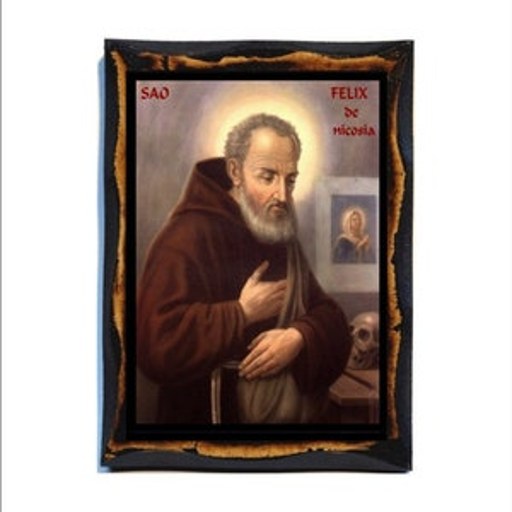
https://etsy.com/market/saint_felix
License: unknown
Confessor Felix
Saint- Feast Day
- 14 January
- Gender
- male
- Church
- Catholic
Places
Roles & Family
Patronage
Nola
Biography
Saint Felix of Nola, commemorated in the Latin liturgical tradition as a priest and confessor, is the figure most commonly intended by the designation Confessor Felix. He belongs to the Christian community of Campania in southern Italy in the third century. Almost nothing about him can be established from documents written in his own lifetime. The earliest substantial witness to his cult is the cycle of natalicia poems that Paulinus of Nola composed for the saint's annual feast between the 390s and the early fifth century, more than a century after the period in which Felix is usually placed. Paulinus, a former Roman senator who settled at Nola and developed the shrine, presented Felix as a local priest who had endured imprisonment and privation under imperial persecution yet had died in peace, and who therefore ranked as a confessor rather than a martyr. Later medieval legendaries and the Roman Martyrology depend, directly or indirectly, on that tradition. No reliable source records an exact year of birth or death; writers have often situated his trials in the context of the Decian persecution of the mid-third century and his death some years afterward of natural causes.
Hagiographical narrative, as shaped by Paulinus and subsequent retellings, makes Felix the son of Hermias, a man of Eastern, often specified as Syrian, origin who had established himself at Nola. Felix himself is thus described as a native of that city. He attached himself to Bishop Maximus of Nola and received ordination to the priesthood. When measures against the Church were enforced, Maximus withdrew into the countryside while Felix was seized, subjected to torture, and thrown into prison. The poems and later vitae relate that he was delivered from confinement by an angel, that he found the aged bishop near death from hunger and exposure, and that he restored him. A further episode, widely repeated in medieval art and folklore, tells that Felix hid in the ruins of an old building or in a dry well; a spider spun a web across the opening, which convinced searching soldiers that the place was undisturbed. After the danger subsided, the clergy and people of Nola are said to have wished to make Felix bishop in succession to Maximus, but he refused the honor and continued to serve as a priest.
The same tradition depicts his remaining years as a life of evangelical poverty. He occupied a small hired plot or a humble dwelling, worked the land with his own hands, and distributed to the needy whatever exceeded his immediate needs. He died at Nola in old age and was buried in the extra-urban cemetery that later developed into the important early Christian complex at Cimitile, a short distance from the city. From the later fourth century that tomb became a major pilgrimage shrine. Paulinus constructed and embellished basilicas, porticoes, and lodgings for pilgrims, organized the January feast with great solemnity, and invoked Felix as heavenly patron of the community he had founded. Inscriptions, mosaic programs, and the poems themselves show how the confessor's shrine structured Christian identity in Campania and attracted visitors from further afield.
In the Western Church the feast of Saint Felix, priest and confessor, was kept on 14 January, a date retained in the Roman Martyrology. He is regarded as a principal patron of Nola. Over the centuries additional legends of healings and of protection from danger accumulated around his name, and his story was included in widely read collections such as the Golden Legend. Modern historical criticism distinguishes the early and well-attested cult at Cimitile from the more picturesque episodes of angelic rescue and the spider's web, which belong to the common stock of confessor legends. Scholars also note the possibility that memories of more than one early Christian named Felix at Nola, one a martyr and another a confessor-priest, may have been combined in the later dossier. No evidence indicates that he held the papacy or a patriarchal see, and the sources are silent on marriage or offspring; the portrait that has been handed down is that of an unmarried priest of modest station whose endurance and humility, rather than a violent death, earned him veneration.