Confessor Gaudiosus is a saint of the Catholic Church. Confessor Gaudiosus's feast day is celebrated on 27 October.
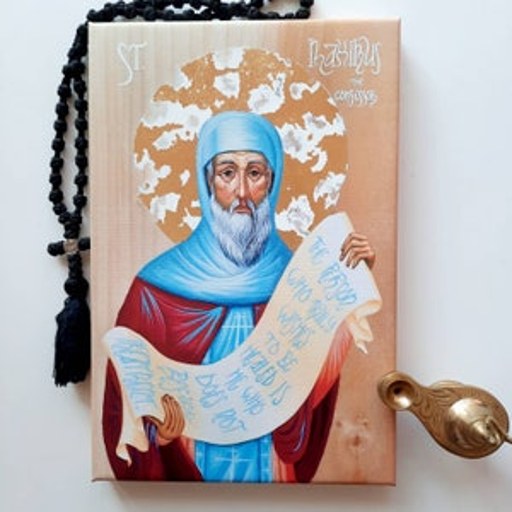
https://www.etsy.com/listing/1294340881/partly-hand-paintedgilded-st-maximus-the
License: unknown
Confessor Gaudiosus
Saint- Feast Day
- 27 October
- Gender
- male
- Church
- Catholic
Places
Roles & Family
Biography
Saint Gaudiosus, often called Gaudiosus the African or Gaudiosus of Naples, was a bishop of Abitina (also spelled Abitinae) in the Roman province of Africa Proconsularis during the fifth century. Almost nothing can be established about his birth, family, or early career from contemporary records. He belonged to the Nicene Catholic episcopate of North Africa at the moment when the Vandal kingdom, whose rulers professed Arian Christianity, completed the conquest of the province. After Genseric captured Carthage in 439, Catholic bishops were subjected to exile, confiscation of churches, and other pressures intended to favor the Arian hierarchy. Gaudiosus was among those who left Africa rather than submit.
He took refuge in Campania and settled at Naples. Later tradition associates him with other African clerical exiles of the same generation, notably Quodvultdeus of Carthage, and credits him with bringing to Naples relics of the African martyr Saint Restituta. In Naples he founded a monastery in which he spent his remaining years. The community was located in the northern district of the city, in the area of an earlier cemetery that subsequently became known as the Catacombs of San Gaudioso, beneath the present basilica of Santa Maria della Sanità in the Rione Sanità. The foundation is sometimes described in later sources as following a monastic rule, but fifth-century documentation of its observance does not survive, and it should not be identified with later medieval orders.
Gaudiosus died at Naples in the middle of the fifth century and was buried in the cemetery attached to his monastery. That burial ground, already in use in late antiquity, developed into an important extra-urban Christian catacomb. His local cult is attested by the dedication of the site and by his entry in the Roman Martyrology, which commemorates him on 27 October as the bishop of Abitina who, because of the Vandal persecution, came to Campania and ended his life in a monastery. He is honored as a confessor—one who endured exile and the loss of his see for the Nicene faith—rather than as a martyr. No formal process of canonization in the later medieval or modern sense is recorded; his veneration is of the ancient, pre-congregational type common to many late-antique bishops.
Because narrative sources from his own lifetime are lacking, reconstructions of his biography depend on the martyrological notice, on Neapolitan liturgical and topographical tradition, and on the general history of the Vandal persecution and the African diaspora in Italy. Precise dates of birth and of death are not preserved. The year 455 is often given in later compilations as the date of his death, but it remains conventional rather than documented. Likewise, claims about specific liturgical or monastic innovations he may have introduced at Naples cannot be verified from fifth-century evidence. What can be said with confidence is that he represents the African Catholic episcopate displaced by the Vandals and that his memory was preserved in the church of Naples through the naming of a major catacomb and through annual liturgical commemoration.