Confessor Ghislain is a saint of the Catholic Church (d. 680). Confessor Ghislain's feast day is celebrated on 9 October. Confessor Ghislain is the patron saint of Saint-Ghislain.
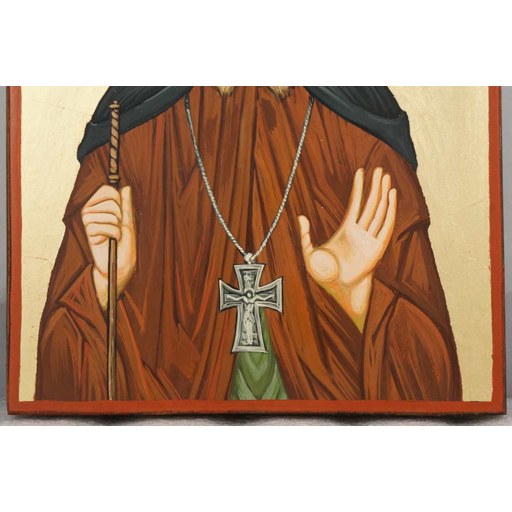
https://blessedmart.com/shop/hand-painted-icons/male-saints-icons/saint-gabriel-confessor
License: unknown
Confessor Ghislain
Saint- Life Span
- d. 680
- Feast Day
- 9 October
- Gender
- male
- Church
- Catholic
Places
Roles & Family
Religious Information
Patronage
Saint-Ghislain
Biography
Saint Ghislain (Latin Gislenus; also rendered Guislain or Gislain) was a seventh-century confessor, hermit, and monastic founder in Hainaut, in the Frankish kingdom of Austrasia, in what is now Belgium. No contemporary charter or chronicle records his parentage, birthplace, or year of birth. A later medieval vita, written long after his death, claimed that he was born in Athens of a senatorial family, received priestly ordination, visited Rome, and was sent north as a missionary. Historians treat that Greek origin as a conventional hagiographical motif rather than a verified fact, and regard Ghislain as a missionary or anchorite active during the Christianization of the Low Countries in the seventh century.
According to the same tradition, he settled as a hermit in a wooded district called Ursidongus, near the later town of Mons. There he established a small monastic cell (cella), which became the nucleus of a community of monks. The house was later identified with the Benedictine abbey and town of Saint-Ghislain, which took his name. He is associated in regional hagiography with other seventh-century saints of Hainaut, including the missionary Saint Amand and the noblewomen Saint Waldetrudis (Waudru) of Mons and Saint Aldegundis of Maubeuge, who are said to have received spiritual counsel from him. These links belong to the legendary cycle of Hainaut sanctity rather than to independently datable documents.
Ghislain died at his monastery about the year 680 and was buried there. He is commemorated as a confessor, not a martyr. His cult remained local at first; the abbey that bore his name became an important religious house in Hainaut, and his relics were venerated and later translated. His feast is kept on 9 October. The historical record does not preserve a verified year of birth, the names of parents, or any secular career. What can be said with reasonable confidence is that a monastic founder named Gislenus was venerated from an early date at the site that became Saint-Ghislain, and that his memory was woven into the network of seventh-century missionary and aristocratic sanctity in Hainaut.
The town of Saint-Ghislain grew around the abbey. Later centuries saw translations of relics, rebuilding after destruction, and continued liturgical commemoration. Ghislain is the patron of the town that bears his name. Claims of further patronages (for example of particular illnesses) are not securely documented in early sources and are omitted here. He was never Bishop of Rome or a patriarch of an Eastern see, and he lived as a celibate monastic founder.