Confessor Gilbert is a saint of the Catholic Church (d. 1189). Confessor Gilbert's feast day is celebrated on 4 February.
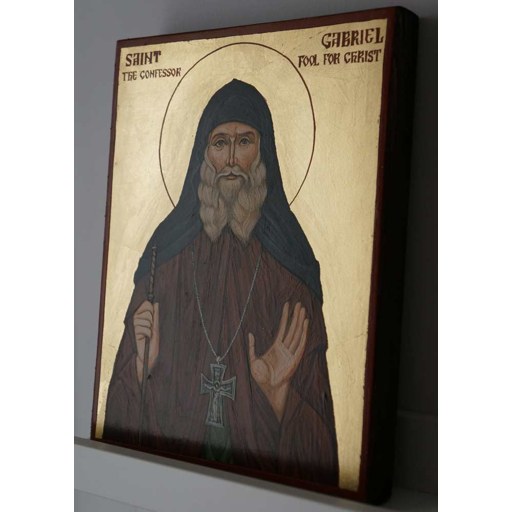
https://blessedmart.com/shop/hand-painted-icons/male-saints-icons/saint-gabriel-confessor
License: unknown
Confessor Gilbert
Saint- Life Span
- d. 1189
- Feast Day
- 4 February
- Gender
- male
- Church
- Catholic
Places
Roles & Family
Religious Information
Canonization
Biography
Gilbert of Sempringham was an English priest and the founder of the Gilbertine Order, the only religious order of purely English origin in the Middle Ages. He was born in the late eleventh century at Sempringham in Lincolnshire, the son of Jocelin, a Norman knight who held the manor there, and an English mother. Traditional accounts, drawing on a near-contemporary life of the saint, relate that Gilbert was physically deformed or of unattractive appearance, so that his father sent him to France for clerical education rather than raising him for knighthood. After studies abroad, possibly at Paris, he returned to England, received holy orders, and was presented by his father to the churches of Sempringham and West Torrington, where he served as parish priest.
In the 1130s Gilbert began directing a group of women who wished to live a life of enclosure and prayer at Sempringham. He housed them in a cloister attached to the parish church and provided for their needs. This community formed the nucleus of the Gilbertine Order. He later added lay sisters to serve the nuns, lay brothers to work the lands, and canons regular following the Rule of St Augustine to act as chaplains and to govern the houses. The resulting double monasteries, with nuns and canons in adjacent but strictly separated enclosures, were a distinctive feature of the institute. Around 1147–1148 Gilbert travelled to France seeking counsel from Bernard of Clairvaux and papal confirmation from Pope Eugene III, who approved the order.
Gilbert governed the growing congregation with notable austerity and administrative skill. He was known for personal poverty, long hours of prayer, and care for the poor and sick. During the conflict between King Henry II of England and Archbishop Thomas Becket, Gilbert was accused of sending funds to the exiled archbishop. He was summoned before the king’s justices and briefly imprisoned, but was released after refusing an oath he considered unjust. Despite advanced age and increasing blindness he continued to visit the houses of his order. He died at Sempringham on 4 February 1189 and was buried in the priory church there.
Pope Innocent III canonized Gilbert in 1202 after an inquiry into his life and reported miracles. His feast is observed on 4 February. The Gilbertine Order flourished in England, numbering some two dozen houses at its height, until it was suppressed at the Dissolution of the Monasteries in the sixteenth century. Gilbert remains notable as the founder of England’s only indigenous medieval religious order and as a legislator of mixed communities of men and women under a single rule.