Confessor Lupus is a saint of the Catholic Church (d. 478). Confessor Lupus's feast day is celebrated on 29 July. Confessor Lupus is the patron saint of Troyes.
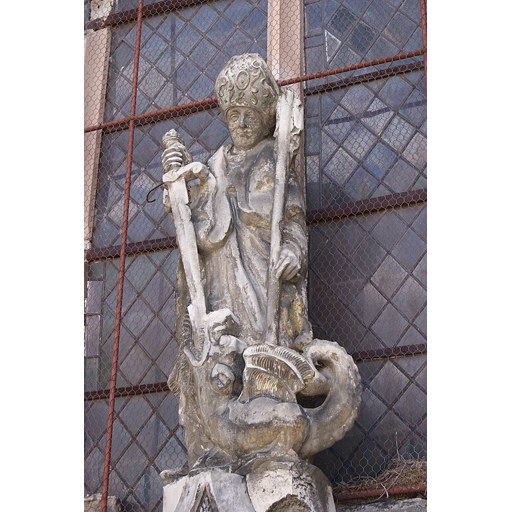
https://anastpaul.com/2024/07/29/saint-of-the-day-29-july-saint-lupus-of-troyes-c383-c479-bishop-and-confessor
License: unknown
Confessor Lupus
Saint- Life Span
- d. 478
- Feast Day
- 29 July
- Gender
- male
- Church
- Catholic
Places
Roles & Family
Religious Information
Patronage
Troyes
Biography
Saint Lupus of Troyes, also known as Saint Loup, was a fifth-century bishop in Roman Gaul venerated as a confessor. He was born at Toul, in northeastern Gaul, into a family of senatorial standing. As a young man he married Pimeniola, the sister of Saint Hilary of Arles. After a period of married life the couple mutually agreed to separate in order to pursue stricter religious vocations; Lupus withdrew to the island monastery of Lérins, then under Saint Honoratus, and lived there as a monk.
Around 426 the church of Troyes elected him bishop in succession to Ursus. He left Lérins reluctantly and governed the see for about half a century. In 429 he accompanied Saint Germanus of Auxerre on a mission to Britain, undertaken to oppose Pelagianism among the British clergy. The journey is attested in near-contemporary sources, notably the Life of Germanus by Constantius of Lyons, and is generally held to have reasserted orthodox teaching in the British church for a time. As bishop, Lupus was remembered for learning, austerity, and pastoral care.
His later fame is bound up with the Hunnic invasion of Gaul in 451. When Attila’s army approached Troyes, Lupus went out from the city to meet the king. Tradition holds that his intercession, together with some form of ransom or temporary hostage arrangement, led Attila to spare Troyes itself, though the surrounding country was ravaged. After the Huns withdrew, Lupus resumed his episcopal duties and continued in office for many more years.
He died at Troyes in 478 and was honoured as a saint from the early Middle Ages. His feast is kept on 29 July, and he is the principal patron of the city of Troyes. Later medieval lives add miraculous episodes typical of the genre, but the main outline of his monastic formation, long episcopate, the British mission, and his role during the invasion of 451 rests on a reasonably secure fifth- and sixth-century documentary basis.