Confessor Mansuetus is a saint of the Catholic Church (d. 685). Confessor Mansuetus's feast day is celebrated on February 19.
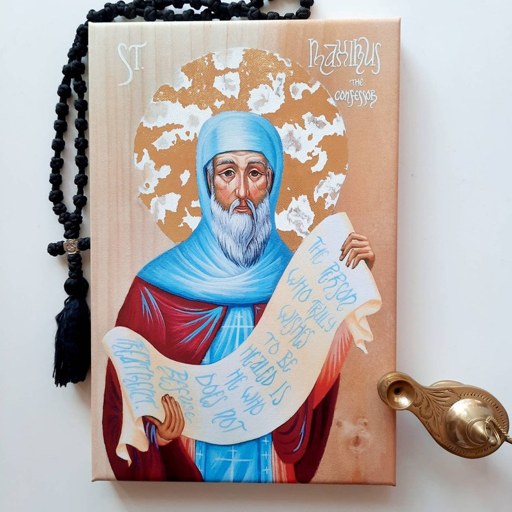
https://etsy.com/listing/1294340881/partly-hand-paintedgilded-st-maximus-the
License: unknown
Confessor Mansuetus
Saint- Life Span
- d. 685
- Feast Day
- February 19
- Gender
- male
- Church
- Catholic
Places
Roles & Family
Biography
Saint Mansuetus (Latin: Mansuetus; Italian: Mansueto) was Archbishop of Milan in the later seventh century, occupying the see from about 676 until his death in 685. Almost nothing reliable is known of his family, birthplace, or life before his election. Contemporary and near-contemporary notices concentrate on his metropolitan activity rather than on a personal vita, and no early medieval biography comparable to those of Ambrose or later Milanese saints has survived. He governed the church of Milan under Lombard kings at a time when that kingdom was completing its long passage from Arianism toward Catholic orthodoxy, and when the wider Church was still resolving the Monothelite controversy.
Mansuetus is historically important chiefly as a Western witness against Monothelitism, the teaching that Christ possessed only one will. In the years leading to the Sixth Ecumenical Council (the Third Council of Constantinople, 680–681), he drew up a profession of faith affirming the two natures and two wills in Christ. That document was sent to Constantinople and was among the testimonies received by the council fathers. He also held a synod at Milan whose acts supported the same dyothelite doctrine. These steps aligned the Ambrosian church with Rome and with the imperial condemnation of Monothelitism, following the earlier resistance of Pope Martin I and Maximus the Confessor. The letter itself is his principal surviving literary monument.
Beyond the Christological dispute, the administrative record of his episcopate is thin. Milan remained a major metropolitan see with its own liturgy and a tradition of relative autonomy, and the archbishop would have had to manage relations both with the Lombard court and with the papacy. Later catalogues of the bishops of Milan include him among the holy occupants of the chair of Ambrose. His feast was kept on 19 February, the date traditionally assigned to his death. Veneration stayed largely local to Milan and Lombardy; he did not become the object of a widespread cult, of numerous church dedications, or of an elaborate legendary cycle.
Modern historical scholarship therefore treats Mansuetus as a documented seventh-century metropolitan whose theological letter can be placed in a precise conciliar context, rather than as a figure of popular miracle stories. Precise details of his birth, education, burial, and personal circumstances are not preserved in sources that meet a critical standard. He is commemorated as bishop and confessor in the Roman Martyrology and in Ambrosian liturgical books.