Confessor Maturin is a saint of the Catholic Church. Confessor Maturin's feast day is celebrated on 1 November. Confessor Maturin is the patron saint of clowns;jesters;comic actors;fools;sailors;the mentally ill;those suffering demonic possession;Larchant.
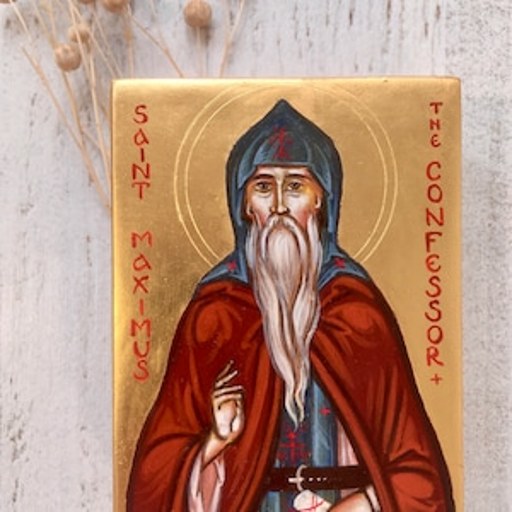
https://www.etsy.com/market/saint_maximus_the_confessor_icon
License: unknown
Confessor Maturin
Saint- Feast Day
- 1 November
- Gender
- male
- Church
- Catholic
Places
Roles & Family
Patronage
clowns;jesters;comic actors;fools;sailors;the mentally ill;those suffering demonic possession;Larchant
Biography
Saint Maturin (Latin Maturinus; French Mathurin), styled a confessor rather than a martyr, belongs to the early Christian tradition of Roman Gaul. No contemporary third-century document records his life; the narrative known to later centuries rests on a medieval vita, generally dated to the ninth century or thereabouts, and on the subsequent growth of his cult at Larchant in the Gâtinais (present-day Seine-et-Marne, France). According to that legend he was born at Larchant to pagan parents, his father being named Marin or Marinus. A bishop called Polycarp—sometimes attached by later writers to the see of Sens, though the identification is historically insecure—is said to have converted and baptized the youth, who in turn converted his own parents. The same tradition presents him as ordained to the priesthood and as gifted in the ministry of exorcism.
The vita further relates that the emperor Maximian (Maximianus Herculius, late third and very early fourth century) summoned Maturin to Rome to deliver the emperor’s daughter from demonic possession, and that the priest succeeded in that task. He is said to have died in Rome; his relics were then translated to Larchant, where a church dedicated to him became the centre of a regional pilgrimage. None of these episodes can be confirmed from imperial or ecclesiastical records of the period. What can be verified is the medieval cult itself: by the eleventh century Larchant was an established shrine, later closely tied to the cathedral chapter of Notre-Dame de Paris, which held the church. The pilgrimage drew the devout through the later Middle Ages; the present ruined Gothic church of Saint-Mathurin at Larchant still marks the site.
His feast is kept on 1 November. In popular devotion he became patron of jesters, clowns, comic actors and “fools,” a patronage linked both to his reputation for curing mental disturbance and to folk custom. He has likewise been invoked for the mentally ill and against demonic possession. In French maritime usage the name Mathurin became a byword for a sailor, and he is accordingly named among patrons of seafarers. In Paris the medieval church of Saint-Mathurin, granted in the thirteenth century to the Trinitarian Order, caused French Trinitarians to be popularly called Mathurins, thereby spreading his name even where the original Gâtinais cult was less well known. He was never Bishop of Rome or a patriarch, and no reliable source records a spouse or children. Canonization, in the modern papal sense, does not apply; he belongs to the ancient, pre-congregational sanctoral tradition of Gaul.