Confessor Mauritius is a saint of the Catholic Church.
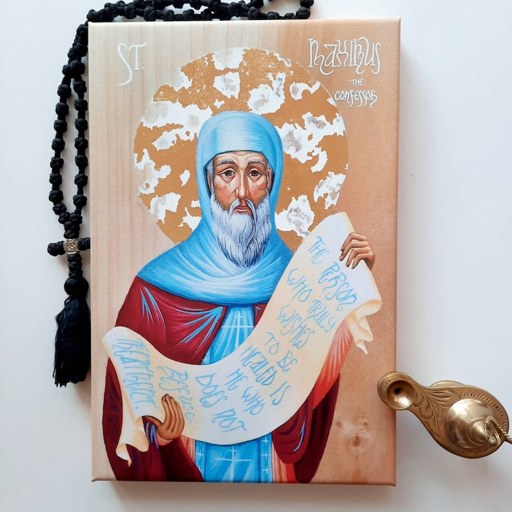
https://etsy.com/listing/1294340881/partly-hand-paintedgilded-st-maximus-the
License: unknown
Confessor Mauritius
Saint- Gender
- male
- Church
- Catholic
Roles & Family
Biography
The designation Confessor Mauritius does not correspond to a single, securely documented saint in the principal Western martyrologies, Byzantine synaxaria, or Oriental Orthodox calendars. The Latin personal name Mauritius (Maurice) was relatively common in the late antique and early medieval Christian world and was borne by several holy men, the most famous of whom is Maurice, commander of the Theban Legion, who is commemorated as a martyr rather than as a confessor. Other local figures named Mauritius appear in scattered liturgical notices, typically with little more than a name and a feast day, and without a surviving vita that would permit historical reconstruction.
In Christian hagiographical usage the title Confessor originally distinguished those who had suffered imprisonment, exile, or torture for the faith without dying as martyrs; in later centuries, especially in the East, it was also applied more broadly to bishops, monks, and ascetics of outstanding virtue. Without an accompanying see, monastery, or reliably attested feast, it is not possible to determine which, if any, of the minor homonymous saints is intended by the present designation, nor whether the title is being used in its technical or its looser sense.
No contemporary chronicle, episcopal list, or early medieval passion or life supplies a birth year, place of origin, or circumstances of death for a Confessor Mauritius that can be verified from independent historical sources. Later compilations and local calendars occasionally mention a Mauritius among confessors, but such entries are characteristically brief and cannot be used to fill in biographical details without circularity or conjecture. Claims regarding religious profession, marital status, children, or patronage therefore remain unsubstantiated.
Because the subject cannot be identified with a known bishop of Rome or with a patriarch or catholicos of one of the historic Eastern sees, and because no reliable account of canonization or beatification survives, those offices and processes cannot be attributed. The name itself is grammatically masculine, consistent with the overwhelmingly male character of the confessor category in early and medieval hagiography. Further precision would require additional identifiers such as a diocese, a date of commemoration, or a manuscript tradition that are not available here.