Confessor Optatus is a saint of the Catholic Church. Confessor Optatus's feast day is celebrated on 4 June.
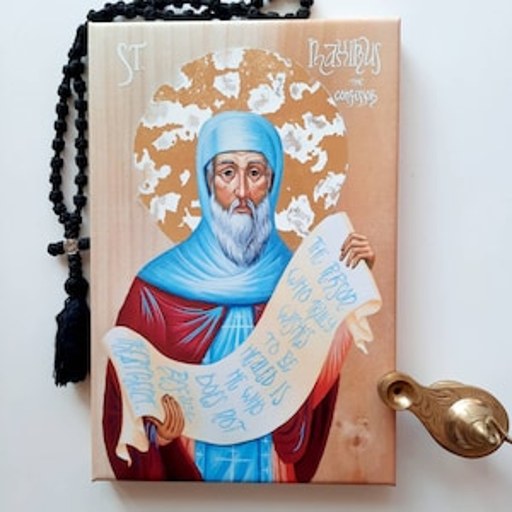
https://etsy.com/listing/1294340881/partly-hand-paintedgilded-st-maximus-the
License: unknown
Confessor Optatus
Saint- Feast Day
- 4 June
- Gender
- male
- Church
- Catholic
Roles & Family
Biography
Saint Optatus, commonly called Optatus of Milevis (or Mileve), was a fourth-century Catholic bishop of Milevis in Numidia, in Roman North Africa (the site corresponds to modern Mila in Algeria). Nothing reliable is known of his birth, family, education, or early career; he enters the historical record already as bishop during the long Donatist schism that divided the African church after the Diocletianic persecution. Donatists held that sacraments conferred by clergy who had lapsed under persecution (the traditores) were invalid and that the true Church consisted only of the pure. Optatus became one of the principal Catholic controversialists against this position and is remembered in the Latin tradition as a confessor rather than a martyr.
His only surviving work is a treatise against Parmenian, the Donatist bishop of Carthage, originally in six books, with a seventh book added in a later recension. The work, composed in the later fourth century (commonly placed around 370), defends the unity and catholicity of the Church, the validity of baptism independently of the personal holiness of the minister, and communion with the apostolic sees, especially Rome. Optatus assembled historical notices and documents on the origins of the schism, including material on the disputed consecration of Caecilian of Carthage, and he offered an early listing of churches in communion as a mark of the true Church. He is among the first Latin writers to give a developed argument for the cathedra of Peter as a principle of unity. The treatise remains a primary source for the history of Donatism and of the African church in the early fourth century.
Saint Jerome, in De viris illustribus (written in the early 390s), listed Optatus among ecclesiastical writers and summarized his anti-Donatist books. Saint Augustine of Hippo later cited him with respect and referred to him as already of blessed memory, which indicates that Optatus had died by about 400. The precise year of death is not recorded; later tradition sometimes assigned it to about 387, but that date is conventional rather than documented. He belonged to the secular episcopate of the African church; there is no evidence that he was a monk or a member of a later religious order, and nothing is known of any marriage or children.
Veneration of Optatus as a saint and confessor is ancient in the African and then the wider Latin church. The Roman Martyrology commemorates him on 4 June as bishop of Milevis, noted for learning and holiness. No contemporary account of his burial survives, and he is not associated in reliable sources with a specific list of patronages. His importance in later Catholic memory rests on the anti-Donatist treatise and on the testimony of Jerome and Augustine rather than on a detailed saint’s life.