Confessor Paul is a saint of the Catholic Church (d. 350). Confessor Paul's feast day is celebrated on 6 November.
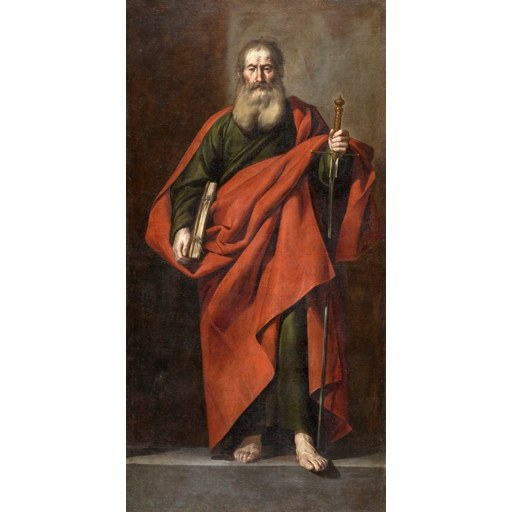
https://www.pinterest.com/srjulia/saint-paul-the-apostle/
License: unknown
Confessor Paul
Saint- Life Span
- d. 350
- Feast Day
- 6 November
- Gender
- male
- Church
- Catholic
Places
Roles & Family
Biography
Saint Paul the Confessor, known also as Paul I of Constantinople, was a fourth-century bishop who occupied the see of Constantinople amid the Arian controversies that followed the Council of Nicaea. He was a native of Thessalonica and served as a priest and as secretary to Alexander, bishop of Constantinople, who had been among the opponents of Arianism at Nicaea. Upon Alexander's death in 337, the Nicene party in the capital elected Paul to succeed him, while an Arian faction put forward Macedonius. The disputed election drew in the imperial court. Constantius II, who favored the Arian cause, refused to accept Paul and initiated the first of several depositions.
Paul repeatedly sought and received support from the Western church. He traveled to Rome and was recognized by Pope Julius I, who, together with other Western bishops, regarded the Constantinopolitan election as valid and viewed the Arian depositions as uncanonical. Paul was restored to his see at intervals, notably during shifting alliances among the sons of Constantine, but each restoration proved temporary. Church historians of the fifth century—Socrates Scholasticus, Sozomen, and Theodoret—describe riots in Constantinople, the intervention of imperial troops, and the installation of rival bishops including Eusebius of Nicomedia and Macedonius. Paul spent substantial periods in exile in the West and in various eastern localities.
In the last phase of his life, around the year 350, Paul was banished to Cucusus in Armenia. Traditional hagiographical accounts state that he was put to death there by strangulation at the hands of Arian agents. Because he died for his confession of the Nicene faith rather than in a formal public martyrdom of the earlier persecutions, he has been honored as a confessor. Later tradition associated the killing with the celebration of the Eucharist. In 381, after the triumph of Nicene orthodoxy under Theodosius I, Paul's relics were translated to Constantinople, where they were received with honor and became a focus of local veneration.
The Eastern Orthodox Church keeps his feast on 6 November. He is numbered among the early archbishops of Constantinople in the lists of that see, which later received the title of Ecumenical Patriarchate. Surviving sources concentrate on his public struggle for Nicene doctrine and on the politics of the Constantinopolitan church; they preserve almost nothing concerning the date of his birth, his family, or his life before ordination. He remains an important figure in the history of the Arian controversy and in the memory of the church of Constantinople as a bishop who suffered exile and death rather than compromise the creed of Nicaea.