Confessor Petronius is a saint of the Catholic Church. Confessor Petronius's feast day is celebrated on October 4. Confessor Petronius is the patron saint of Bologna.
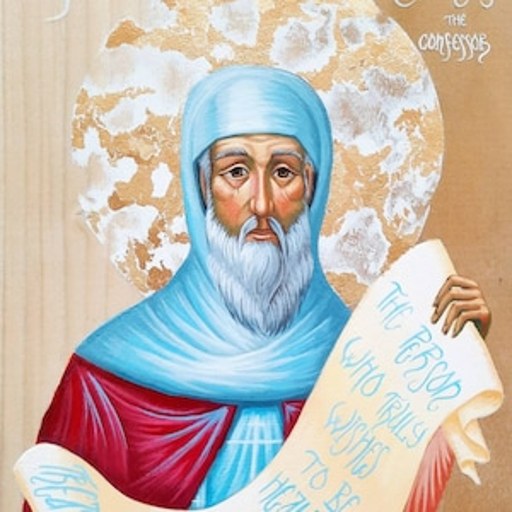
https://www.etsy.com/market/saint_maximus_the_confessor_icon
License: unknown
Confessor Petronius
Saint- Feast Day
- October 4
- Gender
- male
- Church
- Catholic
Places
Roles & Family
Patronage
Bologna
Biography
Saint Petronius, commemorated in the Roman Martyrology as bishop and confessor, occupied the episcopal see of Bologna in the fifth century. Almost nothing about his life can be established from contemporary sources. No letters, conciliar signatures, or fifth-century chronicles mention him with certainty, and the year of his birth is entirely unknown. A much later medieval Vita, composed in the twelfth century, claimed that he belonged to a noble Roman family, that he had visited the holy places in Palestine, and that he reproduced the shrines of Jerusalem in the church complex of Santo Stefano at Bologna. Historians regard this account as largely legendary and of little independent biographical worth.
A bishop named Petronius did, however, govern the church of Bologna during the mid-fifth century, a time of insecurity in northern Italy after repeated barbarian raids. Later tradition credits him with restoring churches that had been damaged and with strengthening Christian institutions in the city. The ancient group of churches known as Santo Stefano, popularly called the Seven Churches or the Jerusalem of Bologna, has been associated with his name since the Middle Ages, even though the fabric of those buildings reflects many subsequent phases of construction.
He is believed to have died in Bologna in the middle of the fifth century. The date 450, often repeated in later calendars and local histories, cannot be confirmed from any contemporary document. He was buried at Santo Stefano. His cult remained essentially local for centuries. In 1141 relics identified as his were solemnly discovered, and in 1390 the commune of Bologna began the vast civic basilica of San Petronio, which became the principal monument of his patronage and a symbol of the city’s identity.
The Roman Martyrology assigns his feast to 4 October, the day still observed in Bologna. He is the principal patron saint of that city. Because he lived long before the formal papal canonization process of the later Middle Ages, his sainthood rests on ancient popular veneration and episcopal recognition rather than on a dated act of a particular pope. He is distinct from Saint Petronius of Die, a Gallic bishop of the same century who had been a monk of Lérins and who is commemorated on 10 January.
No writings by Petronius of Bologna survive, and the details of his pastoral activity, family, and early career remain unknown. His historical importance therefore lies less in a recoverable personal biography than in the enduring civic and liturgical memory that Bologna has attached to its fifth-century bishop and confessor.