Confessor Pope Eugenius is a saint of the Catholic Church (d. 657). Confessor Pope Eugenius's feast day is celebrated on 2 June.
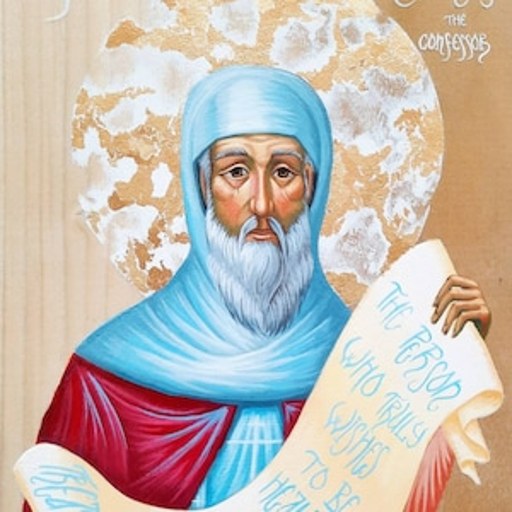
https://www.etsy.com/listing/1294340881/partly-hand-paintedgilded-st-maximus-the
License: unknown
Confessor Pope Eugenius
Saint- Life Span
- d. 657
- Feast Day
- 2 June
- Gender
- male
- Church
- Catholic
Places
Roles & Family
Biography
Pope Saint Eugene I (Eugenius), commemorated in the Roman Martyrology as pope and confessor, was a seventh-century Bishop of Rome. The Liber Pontificalis describes him as a Roman by birth, the son of Rufinianus, and states that he had been in the service of the Roman Church from his youth, serving as a priest of the city before his elevation. Almost nothing else about his family, education, or early career can be verified from reliable sources, and no trustworthy date of birth survives. Later notices stress his personal holiness, meekness, courtesy, and charity to the poor rather than any sequence of high offices held before the papacy.
His election in 654 took place under unusual and coercive circumstances. His predecessor, Pope Martin I, had been arrested in Rome in 653 by the Byzantine exarch on the orders of Emperor Constans II, because Martin had condemned Monothelitism and rejected the imperial Type, an edict that forbade further discussion of whether Christ had one will or two. Martin was tried at Constantinople and exiled to Cherson, where he died in 655. While Martin was still alive in captivity, the Roman clergy, under imperial pressure to fill the see, elected Eugene. Sources indicate that Martin accepted the election from exile so that the Roman Church would not remain long without a visible head. Eugene was consecrated in August 654.
The dominant issue of his brief pontificate remained the Christological dispute over the wills of Christ and the related question of how far the Roman see would yield to imperial religious policy. Legates from Constantinople brought a synodical letter of Patriarch Peter of Constantinople that avoided a clear confession of two natural wills in Christ. When the document became known in Rome, clergy and people refused it as insufficiently orthodox, and there was public resistance to any compromise with Monothelitism. Eugene did not repeat Martin’s dramatic synodal condemnation in the same form, but he also withheld the unqualified assent the court desired. Constans II was angered and is said to have threatened the pope; a repetition of Martin’s fate was averted by the empire’s military crises, including Arab expansion, and by Eugene’s own death.
Eugene I died in Rome on 2 June 657 and was buried in the Vatican basilica of St. Peter. Medieval tradition remembered him as a mild and devout pastor who kept the Roman Church in the faith during a period of imperial coercion. He has been venerated as a saint from early medieval times, with the title of confessor rather than martyr. His feast is kept on 2 June. Beyond the outlines given by the Liber Pontificalis, scattered notices of the Monothelite controversy, and the martyrological tradition, many particulars of his life remain unknown.