Confessor Raymond is a saint of the Catholic Church.
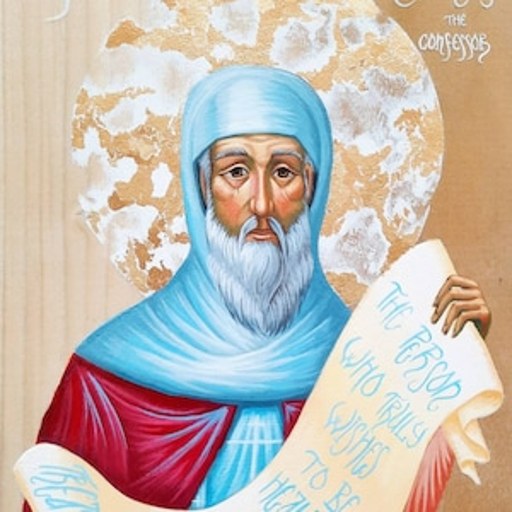
https://www.etsy.com/market/saint_maximus_the_confessor_icon
License: unknown
Confessor Raymond
Saint- Gender
- male
- Church
- Catholic
Roles & Family
Biography
The designation “Confessor Raymond” does not correspond to a single, uniquely identified historical figure in standard hagiographical sources. In the Latin Church, “confessor” is a liturgical class for male saints who were not martyrs, and several medieval saints named Raymond (Raimundus, Ramón) appear in martyrologies under that title. Without a feast date, diocese, religious order, or further epithet, a unique identity, birth year, and place of death cannot be verified. No Pope or Eastern patriarch named Raymond matches this query, and the supplied Wikidata and Wikipedia identifiers are unknown. Fields that would require choosing among several homonymous saints are therefore left blank rather than filled by conjecture.
The best-known candidate in Western calendars is Saint Raymond of Penyafort (Ramon de Penyafort), a Catalan Dominican of the thirteenth century, listed as a confessor in the Roman Martyrology. He was born in the later twelfth century in the district of Vilafranca del Penedès in Catalonia, then in the Crown of Aragon. After legal studies at Barcelona and Bologna he taught canon law, entered the Order of Preachers, and was commissioned by Pope Gregory IX to compile the Liber Extra (the Gregorian Decretals), which became a central text of medieval canon law. He served as the third master general of the Dominicans, encouraged the study of Arabic and Hebrew for missionary work in Iberia, and is associated with the early history of the Mercedarians. He died in Barcelona in 1275 at an advanced age and was canonized in 1601 by Pope Clement VIII. His traditional feast was 23 January; in the present General Roman Calendar it falls on 7 January. He is invoked as a patron of canon lawyers.
A second major figure is Saint Raymond Nonnatus (Ramon Nonat), also a Catalan confessor of the thirteenth century, of the Order of Our Lady of Mercy. Later tradition holds that he was delivered by caesarean section after his mother’s death in childbirth, whence the epithet Nonnatus (“not born”). Hagiography describes him ransoming Christian captives in North Africa, suffering imprisonment, and being named a cardinal by Gregory IX; several of these details are poorly documented outside later legend. He died around the mid-thirteenth century and is associated with Portell and Cardona in Catalonia. His feast is 31 August. He is widely invoked for childbirth, midwives, pregnant women, and the falsely accused.
Other, more local cults include Raymond of Fitero, a twelfth-century Cistercian linked to the foundation of the military Order of Calatrava, and various blesseds and diocesan saints named Raymond in Spain, France, and Italy. Because “Confessor Raymond” is not a unique canonical name, no single birth year, death year, burial place, religious order, or list of patronages can be assigned without guessing. The biographical fields above remain empty for that reason.