Confessor Sabinus is a saint of the Catholic Church (d. 566). Confessor Sabinus's feast day is celebrated on February 9. Confessor Sabinus is the patron saint of Canosa di Puglia;Bari.
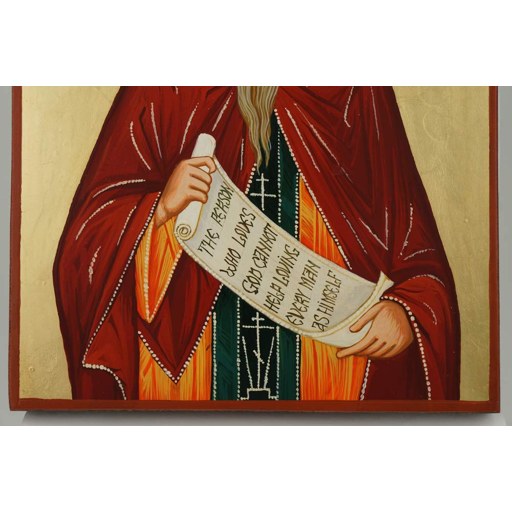
https://blessedmart.com/shop/hand-painted-icons/male-saints-icons/saint-maximus-the-confessor
License: unknown
Confessor Sabinus
Saint- Life Span
- d. 566
- Feast Day
- February 9
- Gender
- male
- Church
- Catholic
Places
Roles & Family
Patronage
Canosa di Puglia;Bari
Biography
Saint Sabinus, known in Italian as San Sabino, served as bishop of Canusium (modern Canosa di Puglia) in Apulia during the sixth century. He is attested in near-contemporary sources rather than solely in later legend. Pope Gregory the Great, writing in the Dialogues in the 590s, portrays Sabinus as an elderly and nearly blind bishop who regularly visited Saint Benedict of Nursia at Monte Cassino. Gregory records a conversation in which Sabinus asked whether Rome would fall to barbarian assault; Benedict answered that the city would not be destroyed by foreign enemies but would waste away through internal decline. Sabinus also appears among the prelates who took part in a synod held at Rome in 531 under Pope Boniface II, confirming that he was an active member of the Italian episcopate in the second quarter of the sixth century.
Gregory further recounts that Sabinus’s archdeacon, impatient to obtain the see, placed poison in the Eucharistic chalice. The bishop drank the wine without injury and declared that God would judge the deed; the archdeacon died not long afterward. These stories, though shaped by hagiographical convention, present Sabinus as a confessor—a bishop who witnessed to the faith by steadfastness and holiness of life rather than by martyrdom. His episcopate coincided with the Gothic War, when Apulia was repeatedly contested by Ostrogothic and Byzantine armies and urban life in cities such as Canosa was severely disrupted.
Traditional chronology places Sabinus’s death in 566. He was buried at Canosa. In the ninth century, after Saracen raids devastated the city, his relics were transferred to Bari for safekeeping. The cathedral of Bari was dedicated to him and still bears his name, even after the translation of the relics of Saint Nicholas in 1087 made Nicholas the city’s most famous patron. Relics of Sabinus are venerated both in Canosa, whose cathedral is likewise dedicated to him, and in Bari. He is the principal patron of Canosa di Puglia and a patron of Bari. The Roman Martyrology and local calendars commemorate him on 9 February as bishop and confessor.
Medieval and later accounts embroidered his life with additional miracles, travels, and wonders that lack support in sixth-century documents. The recoverable historical portrait therefore remains that of a respected Apulian bishop, a friend of Benedict, a participant in Roman synodal life, and the object of an early and enduring cult in Apulia. His title of confessor reflects the ancient Christian distinction between those who died for the faith and those who confessed it through a life of pastoral fidelity under difficult circumstances.