Confessor Similian is a saint of the Catholic Church. Confessor Similian's feast day is celebrated on 16 June.
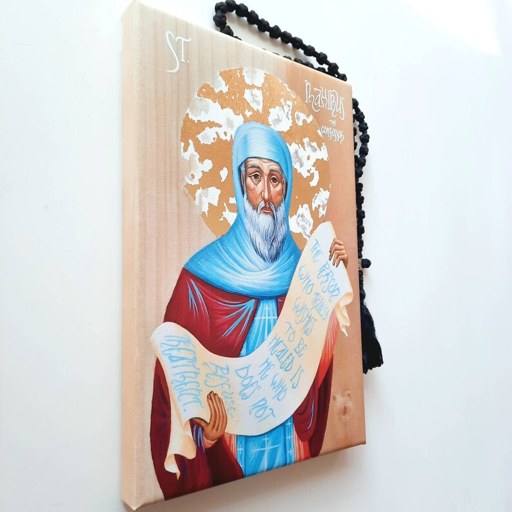
https://etsy.com/listing/1294340881/partly-hand-paintedgilded-st-maximus-the
License: unknown
Confessor Similian
Saint- Feast Day
- 16 June
- Gender
- male
- Church
- Catholic
Places
Roles & Family
Biography
Saint Similian, also known as Similien or Similianus, was a bishop of Nantes in western Gaul who is commemorated in the Roman Martyrology as a bishop and confessor. Almost nothing of his life can be recovered from contemporary records. The principal ancient witness to his cult is liturgical rather than biographical: the Martyrology notes on 16 June, at Nantes, Saint Similian, bishop and confessor. Later episcopal catalogues of the diocese of Nantes list him as the third bishop of the see, after Saint Clair (Clarus), traditionally regarded as the first bishop and evangelizer of the city, and an intervening predecessor whose name is not given uniformly in the lists. Those catalogues were assembled many centuries after the period they describe and mix local memory with legend; they cannot be treated as strictly historical documentation of his career.
The Christian community of Nantes in the late third and early fourth centuries belonged to the Roman province of Gallia Lugdunensis. The Church in Gaul was then still consolidating after the missions of the second and third centuries and was about to pass through the Great Persecution and the Constantinian settlement. No reliable account survives of Similian’s origins, family, education, or the circumstances of his election. Later hagiographical compilations sometimes assign his death to about the year 310, which would place his ministry in the age of Diocletian and Galerius or immediately afterward, but that date is conventional rather than independently confirmed. Whether he endured imprisonment or other hardship that would justify the title “confessor” in its strict early-Christian sense, or whether the title is used in the broader medieval sense of a holy bishop who confessed the faith by his life and teaching, cannot be determined from the sources that remain.
Local tradition in Nantes associated him with burial in a cemetery north of the ancient city. A church was later built over or beside that tomb and became the centre of his cult. The present Basilica of Saint-Similien, a nineteenth-century structure on much older foundations, continues the dedication. Relics attributed to him have been preserved and venerated there. Medieval and early-modern writers added little narrative incident. Unlike Martin of Tours or other comparatively well-documented Gallic bishops, Similian left no contemporary vita, letters, or conciliar signature that would permit a fuller biography. His memory remained essentially local, tied to the church that bore his name and to the diocesan liturgy of Nantes.
He was never Bishop of Rome and never held the office of patriarch or catholicos of an Eastern see. No source records a wife or children, nor membership in a later religious order; he belonged to the secular clergy of the fourth-century Gallic church. His feast has been kept on 16 June in the diocese of Nantes and in the general Roman Martyrology. He was not the subject of a formal papal canonization of the later medieval or modern type; he belongs to the large number of saints whose cult was received from antiquity. Beyond the local church of Nantes, specific patronages of places, professions, illnesses, or causes are not securely attested in the principal hagiographical collections. The historical Similian therefore remains an obscure but genuine figure of the early Gallic episcopate, known chiefly through the persistence of his liturgical cult.