Confessor Venantius is a saint of the Catholic Church. Confessor Venantius's feast day is celebrated on 14 December.
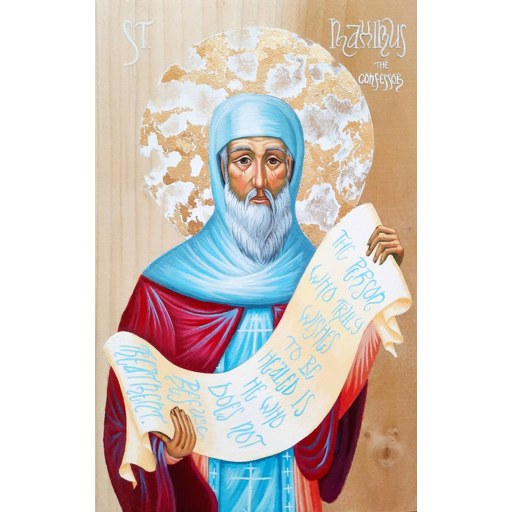
https://etsy.com/listing/1294340881/partly-hand-paintedgilded-st-maximus-the
License: unknown
Confessor Venantius
Saint- Feast Day
- 14 December
- Gender
- male
- Church
- Catholic
Places
Roles & Family
Biography
Venantius Honorius Clementianus Fortunatus, known in later devotion as Saint Venantius Fortunatus and sometimes styled simply Confessor Venantius, was a sixth-century Latin poet, hagiographer, and bishop. He was born in the region of Venetia in northern Italy, at a place called Duplavilis near Treviso, during the first half of the sixth century. Italy at that time was passing from Ostrogothic to Byzantine control, and Fortunatus received a thorough classical education at Ravenna, then an important center of learning. His training in grammar, rhetoric, and law equipped him for the literary career that occupied most of his adult life. Several other saints of late antiquity bore the name Venantius, most notably the youthful martyr of Camerino; the designation Confessor distinguishes the bishop-poet of Poitiers from those who died by violence.
In the mid-560s he left Italy for Gaul. Later tradition attributed the journey to a vow made after he recovered from an eye disease through the intercession of Saint Martin of Tours. He visited the shrine of Martin at Tours and then moved among the Merovingian courts, composing occasional verse for kings, queens, and bishops. He formed a lasting attachment to the community of the Holy Cross at Poitiers, established by the former queen Radegund, who had left her husband King Chlothar I to live as a nun. Fortunatus became the community’s chaplain and the close correspondent and poet of Radegund and of Abbess Agnes. Much of his surviving poetry consists of familiar letters in verse, descriptions of garden banquets, and religious pieces written for this circle. No spouse or children are attested in the sources, and his later life was that of a priest and bishop.
His most enduring works are liturgical. The hymn Vexilla Regis prodeunt, composed for the reception of a relic of the True Cross sent to Radegund by the emperor Justin II, and the passion hymn Pange lingua gloriosi proelium certaminis became part of the Holy Week and festal liturgy of the Latin Church. He also wrote a life of Saint Martin, lives of other Gallic saints, and a substantial body of epitaphs and panegyrics that remain among the principal literary sources for sixth-century Gaul. Toward the end of the century he was chosen bishop of Poitiers. The exact year of his consecration is not recorded, nor is the precise year of his death, which occurred at Poitiers in the opening years of the seventh century.
He was venerated locally as a holy bishop and confessor. The Roman Martyrology and later calendars assign his feast to 14 December. No formal process of canonization in the later medieval or modern sense is recorded; his cult belongs to the era of popular and episcopal recognition. Details of his family origin beyond the Treviso region, and the exact site of his burial, remain unattested in the surviving sources.