Conrad of Constance is a venerable of the Catholic Church (d. 975). Conrad of Constance's feast day is celebrated on 26 November. Conrad of Constance is the patron saint of Constance;Diocese of Constance.
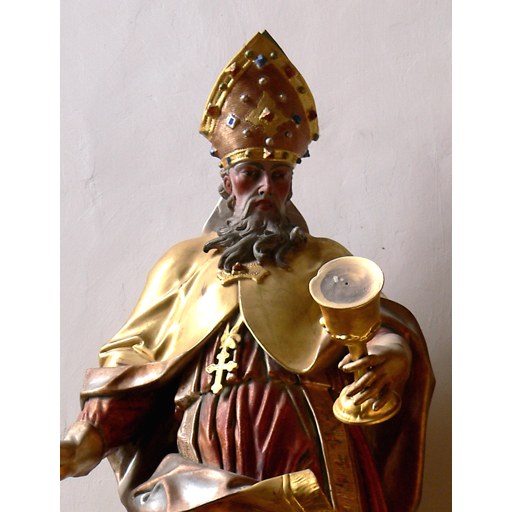
Photo: Andreas Praefcke
License: CC BY 3.0
Conrad of Constance
Venerable- Life Span
- d. 975
- Feast Day
- 26 November
- Gender
- male
- Church
- Catholic
Places
Roles & Family
Patronage
Constance;Diocese of Constance
Canonization
Biography
Conrad of Constance was a tenth-century bishop of Constance in Swabia, in what is now southwestern Germany. Traditional accounts place his birth around the beginning of the tenth century in a family of the Swabian Welfs (Guelphs), a leading noble house of the region; an exact birth year and birthplace are not securely recorded. He was formed among the clergy of Constance, became a canon and later provost of the cathedral chapter, and in 934 was chosen bishop of Constance. He occupied that see for more than forty years, until 975, a tenure that covered much of the reign of Emperor Otto I and the consolidation of the Ottonian church in East Francia.
Medieval lives of Conrad, written in the twelfth century when his cult was being formally promoted, present him as an active pastor who cared for the poor, upheld clerical discipline, and undertook substantial building. According to this tradition he made three pilgrimages to Jerusalem. After returning from the Holy Land he is said to have built at Constance a rotunda dedicated to Saint Maurice, intended to recall the Church of the Holy Sepulchre, and to have enlarged or embellished the cathedral itself. In the political and ecclesiastical world of his day he appears as a typical loyal imperial bishop, attending the Ottonian court and taking part in the synodal and administrative life of the German kingdom.
Later hagiography made him especially famous for a Eucharistic legend. While he was celebrating Mass, a spider dropped into the chalice; because spiders were then commonly thought poisonous, the incident was treated as a trial of faith, and out of reverence for the sacrament he consumed the contents of the chalice. In the story the spider afterward emerged from his mouth without harming him. The episode became his usual artistic attribute: he is shown as a bishop with a chalice and a spider. Whatever its historical basis, the tale expressed medieval conviction of his devotion to the Eucharist.
Conrad died at Constance on 26 November 975 and was buried in the cathedral there. Local veneration grew in the following generations. In the early twelfth century Bishop Ulrich I of Constance advanced the cause, a vita was composed, and in 1123 Pope Callixtus II canonized Conrad at the First Lateran Council. His feast is kept on 26 November. He has long been honoured as a principal patron of the city and former diocese of Constance and remains a figure of regional Catholic memory around Lake Constance and in the later Archdiocese of Freiburg.