Constantin Sârbu is a saint of the Catholic Church (1902 - 1975).
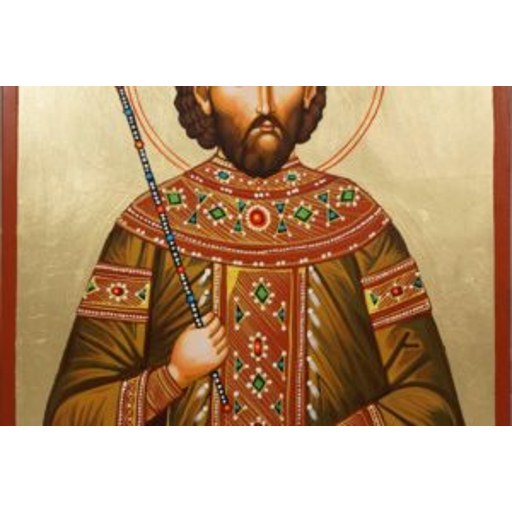
https://www.blessedmart.com/shop/hand-painted-icons/male-saints-icons/emperor-st-constantine-xi/
License: unknown
Constantin Sârbu
Saint- Life Span
- 1902 - 1975 (age 73)
- Gender
- male
- Church
- Catholic
Places
Roles & Family
Biography
Constantin Sârbu was a Romanian Orthodox parish priest of the twentieth century, whose ministry unfolded first in the Kingdom of Romania and then under the communist regime. He was born in 1902 in the village of Gănești in Vaslui County, in the Moldavian region of eastern Romania, into a peasant family. Formed in the traditional piety of the countryside, he received a theological education and was ordained a priest of the Romanian Orthodox Church. He served as a parish priest of the secular clergy rather than as a monk. In that role he exercised the ordinary offices of celebrating the liturgy, preaching, hearing confessions, and caring for the poor in a still largely rural and small-town setting in which the priest remained a central figure in local religious life.
The decades after the Second World War transformed the conditions of Church life in Romania. The communist government restricted theological education, placed clergy under close surveillance, and frequently detained priests regarded as influential or insufficiently compliant. Father Constantin Sârbu continued his priestly work through these years. In the later part of his career he was assigned to the Church of the Wisdom of God, commonly known as Biserica Sapienței, a historic but relatively modest parish in Bucharest. That church became closely associated with his name and with the spiritual direction he offered in the capital.
At Sapienței he was known above all as a confessor. Believers from various social backgrounds, including workers and members of the intelligentsia, sought him out for counsel. Recollections published after 1989 describe him as personally austere, generous toward the poor, and steadfast in traditional Orthodox faith and practice. He remained in Bucharest until his death in 1975. In the years that followed, those who had known him preserved his memory; the parish where he had served became a point of unofficial veneration among the faithful.
In the post-communist period the Romanian Orthodox Church has given increasing attention to clergy and laity who suffered or who simply persevered under atheistic rule. Constantin Sârbu belongs to that literature of twentieth-century Romanian confessors. Publicly available accounts agree on the main outline of his life—his Moldavian origin, his long priesthood, his Bucharest ministry at Sapienței, and the year of his death—while finer details of his family circumstances, the precise chronology of any detention, and the full range of his pastoral activities are less uniformly documented. He was not a bishop, a patriarch, or a member of a monastic order, but a parish priest whose reputation for holiness grew among the faithful of the capital and, later, more widely in Romania.