Corona d'Elx is a saint of the Catholic Church.
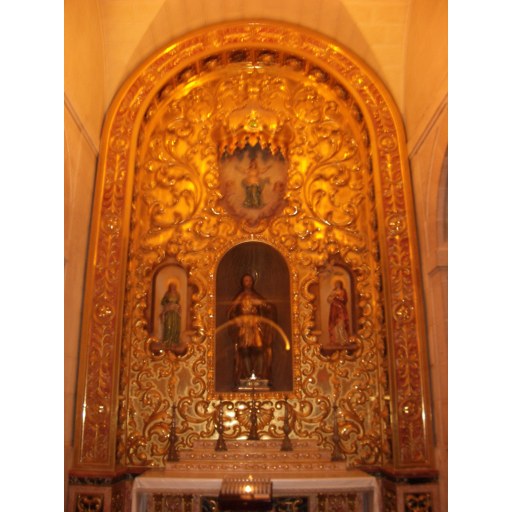
Albertoteles007
License: CC BY-SA 3.0
Corona d'Elx
Saint- Church
- Catholic
Places
Roles & Family
Biography
Corona d'Elx is a figure whose name associates the subject with the city of Elche, known in Valencian as Elx, in the province of Alicante in eastern Spain. The city belonged to the medieval Kingdom of Valencia after the thirteenth-century Christian conquest. Despite the supplied Wikidata identifier, widely available reliable historical and hagiographical sources do not furnish a confirmed biography, including dates of birth or death, family origins, or ecclesiastical career. In keeping with cautious historical method, no unverified particulars are supplied here.
Elche possesses a notable Catholic heritage. Its palm grove, a UNESCO World Heritage site, and the Misteri d'Elx, a unique medieval liturgical play performed in the Basilica of Santa Maria, attest to long-standing religious traditions in the region. Local cults of saints and beati existed throughout the Crown of Aragon and later Spain, yet Corona d'Elx does not appear in the principal listings of the Roman Martyrology, the Acta Sanctorum, or standard dictionaries of Valencian or Spanish saints that can be corroborated from accessible scholarly literature. Consequently, claims of sanctity, a feast day, or patronage cannot be asserted.
The personal name Corona is attested in Christian antiquity, most prominently in the martyr Saint Corona, companion of Saint Victor, whose cult spread in the Latin West and whose feast is observed on 14 May in some calendars. No documentary link, however, has been verified that would identify the Elche namesake with that early martyr or demonstrate a distinct local holy person of the same name who lived in the Iberian Peninsula. Without contemporary charters, notarial acts, convent necrologies, or beatification processes, the life remains obscure.
Further research in the municipal archives of Elche, the diocesan archives of Orihuela-Alicante, or unpublished manuscripts might conceivably yield references. Until such evidence is produced and critically assessed, the historian must record that the subject is poorly documented in accessible scholarly literature. No religious order, marital status, or descendants can be confirmed, nor any papal or patriarchal office. This entry therefore limits itself to acknowledging the toponymic association with Elx and the absence of a verifiable vita.