Cyrion and Candidus is a saint of the Catholic Church. Cyrion and Candidus's feast day is celebrated on March 10.
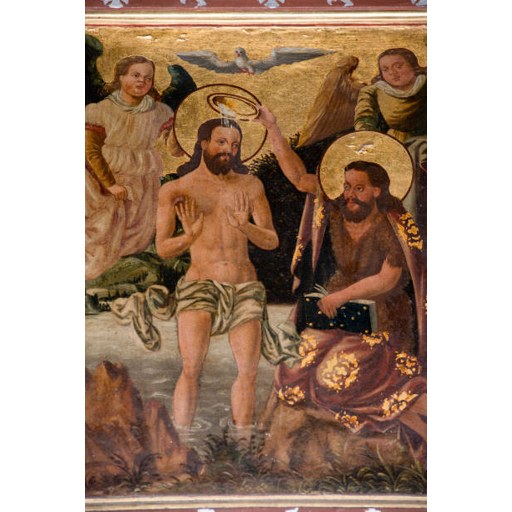
https://gettyimages.com/photos/saint-candido
License: unknown
Cyrion and Candidus
Saint- Feast Day
- March 10
- Church
- Catholic
Canonization
Biography
Saints Cyrion and Candidus, whose names also appear in Greek and Armenian sources as Kyrios or Kirion and Kandidos, are early fourth-century Christian martyrs numbered among the Forty Martyrs of Sebaste. Individual facts about their birth, parentage, or early careers have not been preserved. They are known only as members of a company of Christian soldiers in the Roman army who were put to death at Sebaste in Lesser Armenia, corresponding to present-day Sivas in Turkey, during the last phase of imperial persecution in the East. The emperor Licinius, who ruled the eastern provinces, had by about 316 reversed the policy of toleration associated with the Edict of Milan and imposed tests of pagan sacrifice on the soldiery. The forty refused. Later tradition identifies their unit as the Legio XII Fulminata, long stationed in Cappadocia and Armenia Minor, but the fourth-century homiletic sources do not insist on that legionary designation.
The principal early narrative is the homily on the Forty Martyrs preached by Basil of Caesarea in the later fourth century, within living memory of the events. According to this account and to related Cappadocian testimony, including that of Gregory of Nyssa, the condemned men were stripped of their clothing and driven onto a frozen pond or lake outside Sebaste on a bitterly cold night, while a warm bathhouse stood open nearby as an inducement to recant. After hours of exposure one of the forty abandoned the ice, entered the bathhouse, and died from the shock of the heat. A sentinel who had been guarding the scene was moved by the martyrs' endurance, declared himself a Christian, and took the place of the apostate, so that the number of those who died for the faith remained forty. At daybreak the authorities ordered the legs of any who still lived to be broken. The bodies were then burned and the ashes cast into a river in an attempt to prevent the growth of a relic cult. Christians of the locality nevertheless recovered remains, and a shrine was established at Sebaste. The story, whether in every physical detail or as a stylized passion, was already a public cult legend in Cappadocia and Armenia by the 370s.
Cyrion and Candidus are named in the traditional catalogues of the forty that circulated in Greek liturgical manuscripts and were later taken up in Armenian, Syriac, and Latin martyrologies. Those lists are not perfectly uniform from copy to copy, yet both names recur as standard. No independent passio, dedicatory inscription, or local chronicle isolates Cyrion or Candidus from their companions or supplies a separate biography. Their memory is therefore that of the group: soldier-martyrs of the Licinian persecution, commemorated together. The feast of the Forty Martyrs is observed on 9 March in the Eastern Orthodox Church and in the Armenian Apostolic and other Oriental Orthodox churches, and on 10 March in the Roman Martyrology. Churches and monasteries dedicated to the Forty, especially in Armenia and in the former Byzantine East, keep their names among the company rather than as a distinct pair.
Veneration of the Sebaste martyrs spread quickly in the fourth and fifth centuries. Relics and contact relics were claimed at Constantinople, in various Cappadocian and Armenian churches, and later across the Slavic and Latin worlds. Because the earliest writers treat the forty as a single choir of witnesses, later hagiographers did not develop private legends for Cyrion and Candidus comparable to those attached to some other military saints. They were not monks, bishops, or popes, and nothing reliable is recorded of marriage or children. They belong to the large class of martyrs of the early fourth century whose cult was established by popular and episcopal acclaim long before any centralized process of canonization existed. For the historian they illustrate both the reach of Licinius's measures against Christian soldiers in Armenia Minor and the speed with which a collective martyr cult could be fixed in liturgy and preaching in the generation of the Cappadocian Fathers.