Daniel d'Arle is a saint of the Catholic Church.
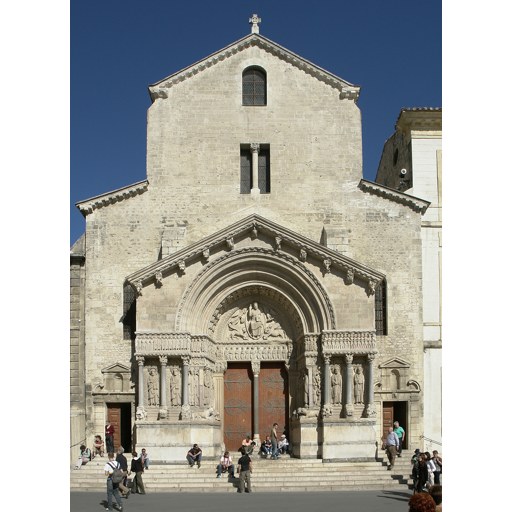
License: CC BY-SA 3.0
Daniel d'Arle
Saint- Gender
- male
- Church
- Catholic
Places
Roles & Family
Biography
Daniel d'Arle is a poorly documented figure whose name, in Catalan and Occitan form, associates him with Arles (Arle), the ancient Roman and early Christian city on the Rhône in Provence. Arles was a metropolitan see from late antiquity, the site of the Council of Arles in 314, and the home of well-attested bishops and saints such as Trophimus, Honoratus, Hilary, and Caesarius. The toponymic surname indicates some connection with that city or its church, but the nature of the connection—birth, residence, clerical office, monastic life, or burial—cannot be verified from standard published sources. No contemporary inscription, conciliar acta, or vita has been identified that would fix his identity.
Major hagiographical and biographical reference works, including the Roman Martyrology and the Bibliotheca Hagiographica Latina, do not supply a securely matching entry. As a result, no birth or death year, parentage, or sequence of offices can be stated. It is not known whether he was a bishop, priest, monk, or layman, nor whether any local cult developed around his memory. Later medieval necrologies or diocesan records of the former archdiocese of Arles might contain notices, but those materials have not been confirmed here and cannot be assumed.
Because the evidence is so thin, questions of religious profession, marriage, children, feast day, patronage, beatification, or canonization remain unanswered. Arles produced a number of saints whose lives rest on near-contemporary texts; Daniel d'Arle does not belong to that documented group on present evidence. Any reconstruction that assigned him an episcopal year, a monastic rule, or a set of miracles would be conjecture rather than history.
Further progress would require examination of unpublished Provençal cartularies, Catalan and Occitan liturgical calendars, and the archives of the archdiocese of Arles. Until such sources are located and critically assessed, the biography of Daniel d'Arle must be treated as unknown. This account therefore records only the onomastic link to Arles and the broader ecclesiastical setting of that city, without attributing dates, offices, or cult that cannot be substantiated.