Darerca of Ireland is a saint of the Catholic Church. Darerca of Ireland's feast day is celebrated on 22 March.
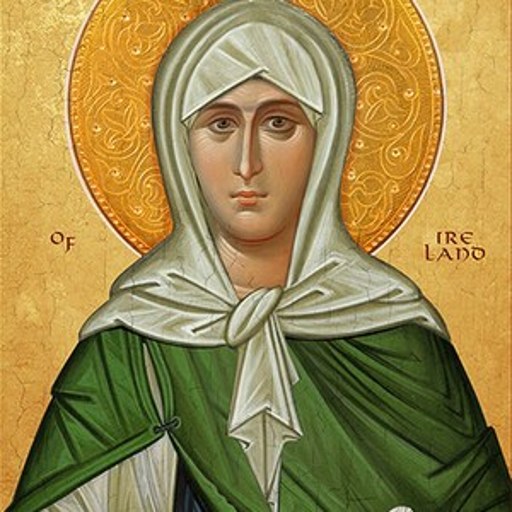
https://etsy.com/listing/1256240565/saint-cera-of-kilkeary-saint-ceara-of
License: unknown
Darerca of Ireland
Saint- Feast Day
- 22 March
- Gender
- female
- Church
- Catholic
Places
Roles & Family
Religious Information
Biography
Saint Darerca of Ireland is a figure of early Irish Christian tradition, customarily identified as a sister of Saint Patrick, the fifth-century missionary who became Ireland's patron saint. She is known primarily from medieval Irish hagiographical sources rather than from contemporary documents. Patrick's own surviving writings, the Confessio and the Letter to the Soldiers of Coroticus, make no mention of a sister, and modern historians generally treat the extended family attributed to Patrick in later lives and genealogies as largely legendary. The principal early narrative source that names Darerca is the Vita tripartita Sancti Patricii, the Tripartite Life of Saint Patrick, a composite Irish and Latin life that reached its present form around the tenth century. She also appears in Irish saintly genealogies and in the medieval martyrologies.
According to the tradition assembled by later compilers, notably the seventeenth-century Franciscan hagiographer John Colgan, Darerca was married twice. Her first husband is named as Restitutus the Lombard. By him she is said to have borne several sons who became bishops and were themselves venerated as saints, among them Saint Sechnall, also called Secundinus, of Dunshaughlin, who in some accounts served as a companion and coadjutor of Patrick; Saint Nectan of Killunche; Saint Auxilius of Killossey; and Saint Diarmaid. After the death of Restitutus she is said to have married Conan, or Chonas, described as a Briton. The children of this second marriage are listed as including Saint Mel of Ardagh, Saint Rioc of Inisboffin, Saint Muinis of Forgney in what is now County Longford, and Saint Maelchu. Two daughters, Saint Eiche of Kilglass and Saint Lalloc of Senlis, are also ascribed to her. Some versions of the tradition give her as many as seventeen sons, all of them bishops, together with the two daughters. Such catalogues of saintly offspring are characteristic of early medieval Irish genealogical writing, which frequently sought to attach local church founders to the family of Patrick in order to enhance their authority and prestige.
Beyond these familial notices, almost nothing can be said with confidence about Darerca's own life, places of residence, or death. She is not credited in the sources with founding a monastery, and she should not be confused with Saint Moninne of Killeavy, an abbess of the fifth or sixth century who was also sometimes called Darerca. The sister of Patrick, if the tradition is taken on its own terms, would have been born in Britain, like Patrick himself, and would have lived in Ireland during the generation of the island's conversion to Christianity in the fifth century. No contemporary record preserves a birthplace, a place of death, or a burial site, and no year of birth or death is known.
Her cult is modest. The Martyrology of Tallaght and the Martyrology of Donegal assign her a feast on 22 March. Like other early Irish saints, she was venerated by inclusion in the calendars of the Irish church rather than by a later papal process of canonization. She is not widely associated with particular patronages of places, professions, or causes. The historical Darerca, if she existed as a distinct person, remains obscure; what the sources preserve is less a biography than a genealogical construct linking a cluster of Leinster and midland saints to the apostolic figure of Patrick.