Daudi Okelo is a blessed of the Catholic Church (1902 - 1918). Daudi Okelo's feast day is celebrated on 18 October.
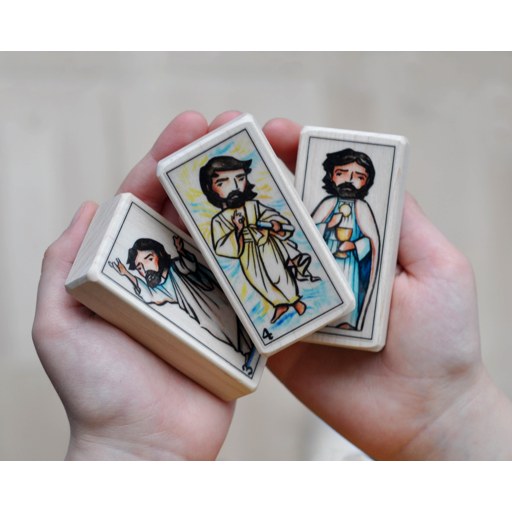
https://almondrodtoys.com/products/copy-of-martin-de-porres-patron-saint-block
License: unknown
Daudi Okelo
Blessed- Life Span
- 1902 - 1918 (age 16)
- Feast Day
- 18 October
- Gender
- male
- Church
- Catholic
Places
Roles & Family
Canonization
Biography
Daudi Okelo was born around 1902 in the village of Ogom-Payira, in the Kitgum region of northern Uganda, among the Acholi people. His family followed traditional Acholi religion, and he grew up in a rural setting that had only recently begun to encounter Catholic missionaries. The Comboni Missionaries (the Verona Fathers) had opened work in the north of the Uganda Protectorate, and their station at Kitgum became the centre from which the faith spread among the Acholi. Daudi received instruction as a catechumen and was baptized on 6 June 1916 by Father Cesare Gambaretto at the Kitgum mission, taking the Christian name Daudi (David). He received first Communion and confirmation on the same day, a practice common in mission territories. Still an adolescent, he showed marked zeal and was soon employed as a catechist, a lay office of real pastoral weight on a frontier where ordained clergy were few.
In 1917 Father Gambaretto assigned Daudi to the remote village of Paimol, about eighty kilometres from Kitgum, to teach Christian doctrine and to gather the people for prayer. Daudi accepted the posting of his own accord. He was accompanied by a younger companion, Jildo Irwa, baptized in 1916, who served as assistant catechist. At Paimol the two youths lived in a simple hut, instructed children and adults, led morning and evening prayers, and tried to settle disputes in a Christian spirit. Their work met both interest and hostility. Some local leaders and adherents of ancestral custom regarded the new teaching as a threat to traditional authority and practice. The region was also under strain from drought, raiding, and disease, including the influenza pandemic of 1918, which sharpened suspicion of outsiders and of religious change.
On 18 October 1918 a group of men attacked the catechists at Paimol. According to the accounts preserved by the missionaries and later examined in the beatification process, Daudi was seized and pressed to abandon his catechetical work and to give up the Christian religion. He refused. He was then killed with a spear. Jildo Irwa, who would not flee or recant, was likewise put to death. Daudi was about sixteen years old. Their bodies were left for a time in the bush; local Christians later buried them at the place of martyrdom. The Church judged the killings to have been motivated by hatred of the faith. News of the deaths reached Kitgum, and the memory of the two young catechists was kept among Acholi Catholics and the Comboni missionaries.
Devotion to Daudi Okelo and Jildo Irwa grew over the following decades, especially at Paimol, which became a place of pilgrimage. A shrine developed at the site associated with their martyrdom, often called Wi-Polo. After examination of their lives, the circumstances of their deaths, and their reputation for holiness, Pope John Paul II beatified them together on 20 October 2002 in Saint Peter's Square in Rome. They are commemorated liturgically on 18 October. They have not been canonized. In Uganda they are honoured as models of youthful fidelity and of the lay catechist’s vocation, particularly in the north of the country. Historical sources for Daudi’s earliest years remain limited; much of what is known derives from missionary records and from testimony gathered for the beatification.