Deacon Paul is a saint of the Catholic Church (d. 799).
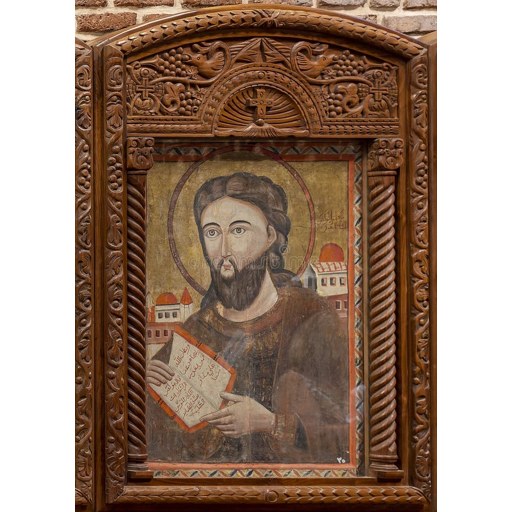
https://dreamstime.com/photos-images/icon-apostle-paul.html
License: unknown
Deacon Paul
Saint- Life Span
- d. 799
- Gender
- male
- Church
- Catholic
Places
Roles & Family
Religious Information
Biography
Paul the Deacon, known in Latin as Paulus Diaconus and also called Paul Warnefrid, was a Lombard historian, poet, and Benedictine monk of the eighth century. He was born in the earlier decades of that century at Forum Julii, today Cividale del Friuli, in the Duchy of Friuli within the Lombard kingdom of Italy. His family belonged to the Lombard nobility; his father was named Warnefrid and his mother Theodelinda. He received a thorough education in the liberal arts at the royal court in Pavia, where he studied Latin authors and acquired some knowledge of Greek, an unusual accomplishment in the Latin West of his time.
After completing his studies he served at the Lombard court and was ordained to the diaconate. The Frankish conquest of the Lombard kingdom by Charlemagne in 774 disrupted his world. A brother of Paul was carried off into Francia, and Paul addressed a verse petition to Charlemagne seeking the brother’s release. The request was granted, and Paul himself later spent several years at the Frankish court, participating in the circle of scholars around Charlemagne that formed the core of the Carolingian Renaissance. There he taught Greek and composed poetry and historical works, including a history of the bishops of Metz written at the request of Bishop Angilram.
Around the mid-780s Paul withdrew from court life and entered the monastery of Monte Cassino, where he spent his remaining years as a monk. At Monte Cassino he produced his principal historical work, the Historia Langobardorum, which traces the story of the Lombard people from their legendary Scandinavian origins through their migration into Italy and down to the death of King Liutprand in 744. The work remains a fundamental narrative source for Lombard and early Italian history. He also wrote a life of Pope Gregory the Great, a collection of homilies, a commentary on the Rule of Saint Benedict, and various poems and letters.
Paul died at Monte Cassino, according to long-standing tradition on 13 April 799, and was buried at the abbey. He was not the object of a formal process of canonization in later centuries, and he does not appear with an assigned feast in the general Roman calendar, though he is remembered as one of the outstanding learned men of the early medieval West and as the principal historian of the Lombards. His writings circulated widely in manuscript throughout the Middle Ages and continue to be studied as both historical sources and literary products of the Carolingian age.