Denys is a saint of the Catholic Church. Denys's feast day is celebrated on 9 October. Denys is the patron saint of France;Paris;against headaches;against rabies;against hydrophobia;against frenzy;against demonic possession;against strife.
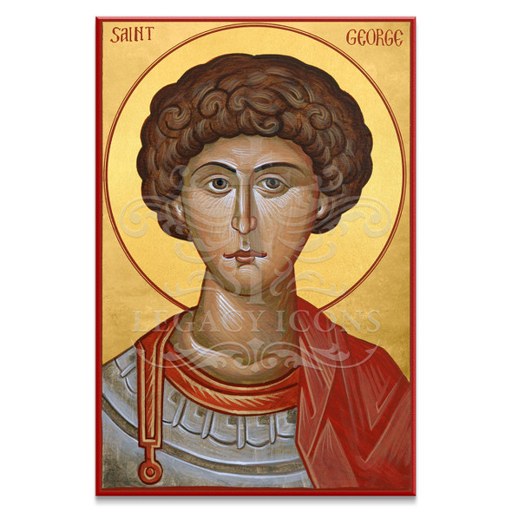
https://legacyicons.com/saint-denis-of-paris-whirledge-icon-s661/
License: unknown
Denys
Saint- Feast Day
- 9 October
- Gender
- male
- Church
- Catholic
Places
Roles & Family
Patronage
France;Paris;against headaches;against rabies;against hydrophobia;against frenzy;against demonic possession;against strife
Biography
Saint Denys, also known as Denis or Dionysius of Paris, was a Christian missionary of the third century and is venerated as the first bishop of Paris and a principal patron of France. Almost nothing can be established about his birth, family, or early life. The earliest substantial notice comes from Gregory of Tours in the sixth century, who records that Denys was one of seven bishops dispatched from Rome to Gaul around the middle of the third century, in the time associated with the consulate of Decius and Gratus. Denys was sent to the civitas of the Parisii, where he organized a church on what later tradition identifies as the Île de la Cité.
He is said to have been assisted by a priest named Rusticus and a deacon named Eleutherius. During a persecution of Christians—placed by later writers under the emperors Decius or Valerian—the three were arrested, imprisoned, and put to death by beheading. The precise year is not recorded in contemporary sources. A later medieval legend, cultivated especially at the royal abbey that bore his name, claimed that the execution took place on the hill subsequently called Montmartre and that after decapitation Denys picked up his own head and walked northward, preaching, to the place he had chosen for burial. That cephalophoric miracle, though historically unverifiable, became the most famous element of his legend and a standard feature of his iconography.
The tomb north of Paris attracted pilgrims from an early date. In the seventh century the Frankish king Dagobert I richly endowed a monastery at the shrine; the Abbey of Saint-Denis grew into one of the most important religious houses of the Frankish and later French kingdoms, and its church became the necropolis of the French monarchs. In the ninth century Abbot Hilduin of Saint-Denis composed a Passio that identified the Parisian martyr with Dionysius the Areopagite, the Athenian convert of the Apostle Paul mentioned in the Acts of the Apostles, and with the author of the late-antique mystical writings known as the Corpus Dionysiacum. Medieval Christendom widely accepted this identification, which modern historical scholarship rejects. The historical Denys remains an obscure missionary bishop of mid-third-century Gaul.
Denys has been honored as a martyr-saint from late antiquity. His feast is observed on 9 October in the Roman calendar. He is patron of France and of the city of Paris, and he is invoked against headaches, rabies, frenzy, and demonic possession. He is also numbered among the Fourteen Holy Helpers. Standard images show him as a bishop carrying his mitred, severed head. The basilica that stands over his traditional burial place at Saint-Denis, north of Paris, remains the principal monument of his cult.