Denys is a saint of the Catholic Church. Denys's feast day is celebrated on 9 October. Denys is the patron saint of France;Paris;against headaches;against rabies;against frenzy;against strife;against demonic possession.
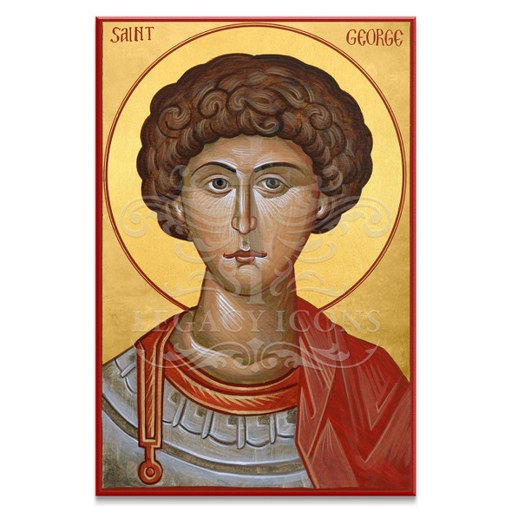
https://legacyicons.com/saint-denis-of-paris-whirledge-icon-s661/
License: unknown
Denys
Saint- Feast Day
- 9 October
- Gender
- male
- Church
- Catholic
Places
Roles & Family
Patronage
France;Paris;against headaches;against rabies;against frenzy;against strife;against demonic possession
Biography
Saint Denys, also known as Denis or Dionysius of Paris, was a Christian missionary and martyr of the third century, traditionally honoured as the first bishop of Paris and as a principal patron saint of France. Virtually nothing can be established about his birth, family, or early career. The principal early witness is Gregory of Tours, writing in the later sixth century, who reports that Denys was one of seven bishops dispatched from Rome to Gaul at the time of the Decian persecution in the middle of the third century. In that account he preached in the region of Lutetia (Paris), governed the local church as bishop, and suffered martyrdom together with his companions Rusticus, a priest, and Eleutherius, a deacon. No contemporary document survives, and later medieval lives greatly embroidered this slender historical core. Even the exact year of his death is not securely known: sources associate the mission with the Decian period around the mid-third century, while some later martyrologies place the martyrdom under Valerian, but neither date can be verified with precision.
According to the same early tradition, Denys was buried at Catulliacus, a site a few miles north of Paris that subsequently took his name and became the town of Saint-Denis. A church stood over the tomb by late antiquity, and the shrine attracted pilgrims from the Frankish period onward. In the seventh century and after, the monastery that grew up around the tomb—the Abbey of Saint-Denis—became one of the most important religious houses of the Frankish and later French kingdoms. French monarchs were buried there for centuries, and the abbey church developed into the present Basilica of Saint-Denis, a landmark of Gothic architecture. The precise place of execution is less certain. A later tradition located the beheading on the hill now called Montmartre (a name later explained as meaning mount of the martyrs), but that etymology and localization are not confirmed by the earliest sources, which emphasize the burial at Catulliacus rather than a Montmartre passion site.
Medieval hagiography transformed Denys into a cephalophore: after decapitation he was said to have taken up his own head and walked to his chosen burial place, preaching as he went. That motif, popularized in the Golden Legend and in countless sculptures and stained-glass windows, is legendary rather than historical. In the ninth century Abbot Hilduin of Saint-Denis composed a passion that identified the Parisian martyr with Dionysius the Areopagite, the Athenian mentioned in the Acts of the Apostles, and with the author of the Corpus Dionysiacum, a body of Greek mystical theology actually written around the year 500. Those identifications, though enormously influential in the Middle Ages and long repeated in liturgy and art, are rejected by modern historians. Denys of Paris, the Areopagite of Acts, and the Pseudo-Dionysian writer are three distinct figures.
Denys has been liturgically commemorated on 9 October in the West since early medieval times. He is patron of France and of the city of Paris, and popular devotion has invoked him against headaches, rabies, frenzy, civil strife, and demonic possession, associations encouraged by the story of his beheading. He was not canonized by a formal papal process; his cult is of pre-congregation antiquity. Historical reconstruction can affirm only a third-century missionary bishop who died a martyr in the Paris region and whose tomb became a major cult centre of the Frankish church. The rest of the medieval dossier, however spiritually significant for later devotion, royal ideology, and Christian art, belongs to legend rather than to recoverable biography.