Deogratias de Carthage is a saint of the Catholic Church (d. 457). Deogratias de Carthage's feast day is celebrated on 22 March.
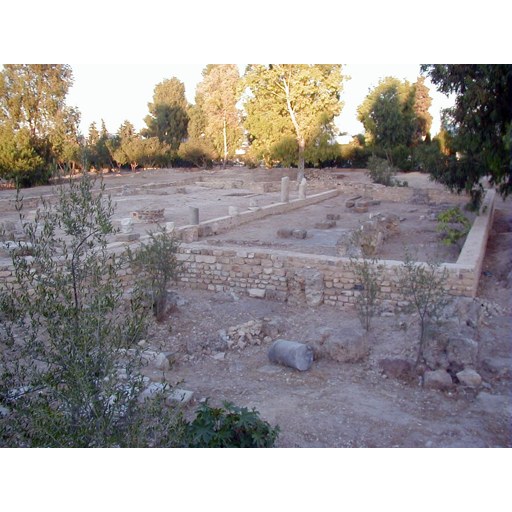
Pradigue
License: CC BY-SA 3.0
Deogratias de Carthage
Saint- Life Span
- d. 457
- Feast Day
- 22 March
- Gender
- male
- Church
- Catholic
Places
Roles & Family
Biography
Deogratias was bishop of Carthage in the mid-fifth century, during the early period of Vandal domination in Roman North Africa. Almost nothing can be established about his birth, family, or education. He is known to have served as a deacon of the Carthaginian church before his elevation to the episcopate. A deacon of the same name at Carthage received from Augustine of Hippo, around the first years of the fifth century, the treatise De catechizandis rudibus, written in answer to a request for advice on the instruction of converts. Later tradition has often treated the deacon and the bishop as one person; the identification is plausible on onomastic and local grounds but remains unproven, because more than half a century separates Augustine’s letter from the episcopal consecration of 454.
When the Vandal king Gaiseric captured Carthage in 439, he exiled the Catholic bishop Quodvultdeus together with a large part of the clergy. The metropolitan see of Africa then stood vacant for about fourteen years, while the Arian Vandal regime restricted Catholic public worship and episcopal succession. In 454 Gaiseric relented, reportedly at the instance of the western emperor Valentinian III and with the concurrence of Pope Leo I, and allowed the Catholics to consecrate a bishop. Deogratias was chosen and ordained. His appointment restored a Catholic hierarchy in the capital, though the Vandals themselves remained Arian and continued to exert pressure on the Nicene population.
The following year Gaiseric launched a seaborne attack on Rome. In June 455 the Vandals entered the city and, after a prolonged sack, carried thousands of captives to Africa, intending to sell them as slaves. Among the prisoners were people of every rank, including members of senatorial households. Deogratias sold the gold and silver liturgical vessels and other treasures of the church of Carthage in order to purchase the freedom of as many of these captives as possible. He then turned two of the city’s large basilicas—the Basilica Fausti and the Basilica Novarum—into shelters. There the ransomed men, women, and children were housed, fed, and given medical care. Victor of Vita, the principal near-contemporary historian of the Vandal persecution, records that the bishop himself visited the sick and organized the relief, and he presents this work as the defining act of Deogratias’s short episcopate.
The physical and pastoral burden of caring for so great a number of destitute people proved too great. After only three years as bishop, Deogratias died in 457. Gaiseric immediately forbade the election of a successor, and the see of Carthage remained without a Catholic bishop until 481, when Huneric permitted the consecration of Eugenius. No reliable account of Deogratias’s burial has been preserved. The narrative of his charity, transmitted by Victor of Vita in the Historia persecutionis Africanae provinciae, became the basis of his cult.
Deogratias is venerated as a saint in the Catholic Church. The Roman Martyrology commemorates him on 22 March, explicitly recalling that he redeemed many captives whom Gaiseric had brought from Rome. He is not associated in the historical record with a religious order, a documented marriage, or a formal papal canonization of the later medieval type; his cult rests on the African and Roman martyrological tradition. Because the surviving sources are few, many details of his life—his age, his precise origins, and the circumstances of his death beyond the year and the general cause of exhaustion—cannot be verified. What remains clear is his role as the first Catholic bishop of Carthage after the Vandal conquest and as a notable example of episcopal ransoming and hospitality in a time of war and forced displacement.