Devasahayam Pillai is a saint of the Catholic Church (1712 - 1752). Devasahayam Pillai's feast day is celebrated on 14 January.
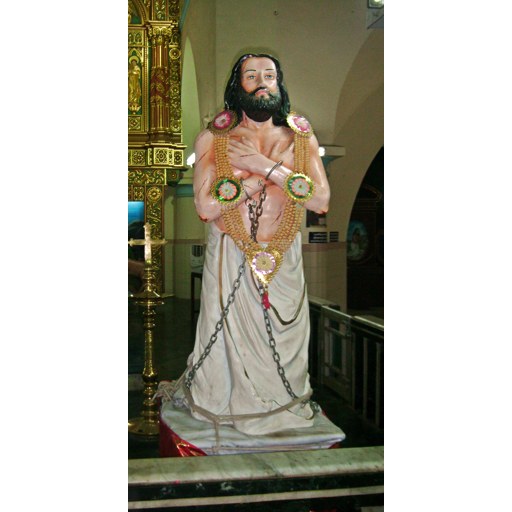
Kumbalam
License: CC BY-SA 3.0
Devasahayam Pillai
Saint- Life Span
- 1712 - 1752 (age 40)
- Feast Day
- 14 January
- Gender
- male
- Church
- Catholic
Places
Roles & Family
Religious Information
Canonization
Biography
Devasahayam Pillai was born in 1712 at Nattalam in the Kingdom of Travancore, in the far south of the Indian subcontinent (today in Kanyakumari district, Tamil Nadu, India). His original name was Neelakanta Pillai. He came from a Nair family, a community that occupied a high place in the caste order of Kerala and Travancore, and he obtained employment in the royal administration of King Marthanda Varma. In that setting he would have been familiar with the Hindu religious and social world of the Travancore court in the first half of the eighteenth century, as well as with the growing European military and missionary presence on the southern coasts.
His conversion is dated to about 1745. Catholic accounts link it to conversations with Eustachius De Lannoy, a Dutch officer who, after capture, served Travancore and was a Catholic, and to the ministry of Jesuit missionaries working from the Madurai and Fishery Coast missions. He received baptism from the Jesuit Giovanni Battista Buttari at Vadakkankulam and took the name Lazarus, known in Tamil as Devasahayam, meaning God is my help. His wife, Bhargavi Ammal, was likewise baptized and is remembered under the Christian name Gnanapoo. As a high-caste convert who continued to speak of Christian teaching, including the equal dignity of persons, he drew the anger of officials and of members of his former community. Conversion of a court-connected Nair was socially explosive in a kingdom where caste and royal Hindu identity were closely bound.
From about 1749 he was arrested and held for a long period. Tradition in the Latin Church of southern India recounts that he was degraded from office, publicly humiliated, and subjected to repeated physical torment in an effort to make him abandon Christianity. After years of captivity he was taken to the hill of Kattadimalai, near Aralvaimozhi, and shot on 14 January 1752. His remains were brought to Kottar and buried at the church that is now St. Francis Xavier’s Cathedral in Nagercoil, which became the principal site of his tomb and of local devotion.
Veneration of Devasahayam as a martyr took root among Catholics in Travancore and the Tamil country and continued into the modern dioceses of Kottar and neighbouring sees. The Holy See recognized his martyrdom in the pontificate of Benedict XVI; he was beatified at Nagercoil on 2 December 2012. Pope Francis canonized him in Rome on 15 May 2022. He is commemorated on 14 January and is honoured as a lay witness of the eighteenth-century Indian Church, notable as a married man of high caste who died for the Christian faith rather than as a member of a religious order or the clergy.