Diana degli Andalò is a blessed of the Catholic Church (1201 - 1236). Diana degli Andalò's feast day is celebrated on 10 June.
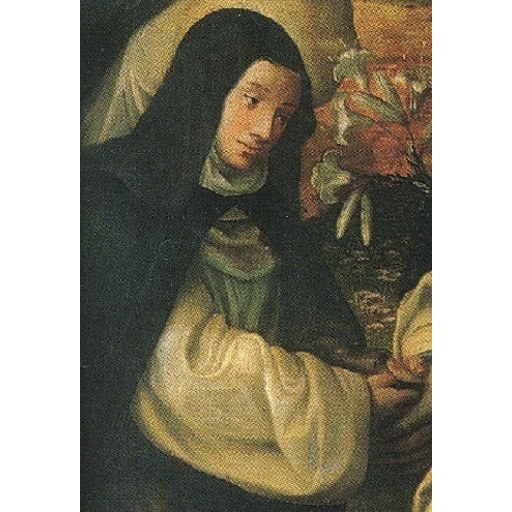
Prospero Fontana
License: Public domain
Diana degli Andalò
Blessed- Life Span
- 1201 - 1236 (age 35)
- Feast Day
- 10 June
- Gender
- female
- Church
- Catholic
Places
Roles & Family
Religious Information
Canonization
Biography
Diana degli Andalò, also known as Diana d'Andalo, was born around 1201 in Bologna into the powerful Andalò family, a Ghibelline lineage of considerable political and economic standing in the Emilian commune. Her father, Andalò di Lorenzo, belonged to the urban nobility that dominated Bolognese public life in the early thirteenth century. Little is recorded of her childhood, but she came of age in a city marked by factional conflict and by the arrival of the new mendicant orders. In 1218 the Order of Preachers established a community in Bologna, and Saint Dominic himself preached and organized the brethren there in the years before his death. According to the traditional accounts, Diana made a vow of virginity to Dominic in 1219 and promised to work for the foundation of a house of Dominican nuns in her native city.
Family opposition to her religious vocation was intense. The Andalò household had no wish to see a daughter of marriageable rank withdraw from the marriage alliances through which noble families consolidated power. In 1221 she sought entry at the Augustinian monastery of Ronzano, in the hills near Bologna, apparently as a step toward the Dominican foundation she had promised. Relatives forcibly removed her from the convent; in the struggle she suffered serious injury, including broken ribs, and was confined at home. Saint Dominic had died in Bologna on 6 August 1221, before the women's monastery could be erected. The project was taken up by Blessed Jordan of Saxony, Dominic's successor as Master of the Order, who became Diana's spiritual director and correspondent. Dozens of letters from Jordan to Diana survive and form an important witness to early Dominican spirituality and to a relationship of frank spiritual friendship; her own letters to him are not extant.
With the support of Jordan and of Cardinal Ugolino of Ostia, the future Pope Gregory IX, the monastery of Sant'Agnese was founded in Bologna in 1223. Nuns were sent from San Sisto in Rome, the community Saint Dominic had established for women, to form the new house; among them were Cecilia Cesarini, who had known Dominic personally and later dictated recollections of him, and the nun Amata. Diana entered Sant'Agnese and is regarded as its foundress and a leading member of the first community, though the precise offices she held are not always specified in the sources. The correspondence with Jordan continued through the 1220s and into the 1230s, touching on the spread of the Order, the needs of the Bologna nuns, and Diana's own spiritual trials. Her brother Loderingo degli Andalò would later, long after her death, become one of the founders of the Order of the Knights of the Blessed Virgin Mary, the so-called Frati Gaudenti, and would be remembered by Dante; that later family history lies outside Diana's own lifetime.
Diana died at the monastery of Sant'Agnese on 10 June 1236, when she was still in her thirties, and was buried there. Cecilia and Amata remained associated with the same community and, with Diana, came to be venerated together as the foundresses of Dominican nuns in Bologna. Their cult was confirmed by Pope Leo XIII in 1888, and Diana is honored as Blessed in the Catholic Church, especially within the Dominican Order. Her feast is kept on 10 June, the anniversary of her death, sometimes jointly with Cecilia and Amata. The letters of Jordan of Saxony remain the principal contemporary source for her inner life and for the difficulties that attended the first Dominican nuns in northern Italy. She was never married and had no children; her adult life was that of a consecrated religious of the Order of Preachers.