Dionysius of Vienne is a saint of the Catholic Church (d. 193). Dionysius of Vienne's feast day is celebrated on 8 May.
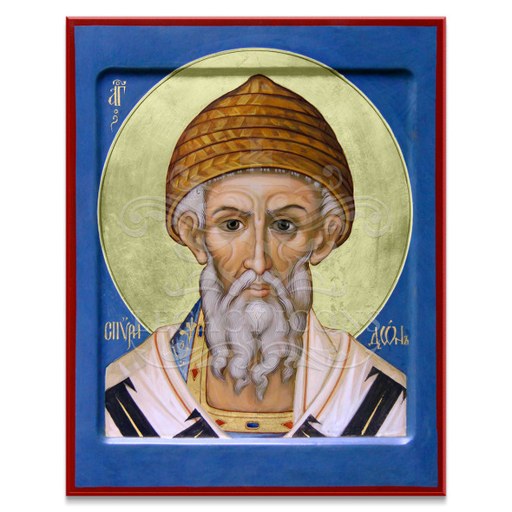
https://legacyicons.com/saint-dionysius-of-vatopedi-davidovskiy-icon-s647/
License: unknown
Dionysius of Vienne
Saint- Life Span
- d. 193
- Feast Day
- 8 May
- Gender
- male
- Church
- Catholic
Places
Roles & Family
Biography
Dionysius of Vienne, known in French as Denis or Denys de Vienne, was a bishop of the church of Vienne in the Rhône valley of Roman Gaul during the later second century. Traditional lists of the bishops of Vienne count him as the sixth occupant of the see and the successor of Saint Justus. Later medieval catalogues assign his episcopate roughly to the closing decades of that century and give about 193 as the year of his death. No contemporary document records his birth, family, education, or early life, and his place of origin is unknown.
Vienne, the Roman colony of Vienna in Gallia Narbonensis, was one of the principal cities of southern Gaul and an early focus of Christian life. Local tradition later traced the church’s foundation to Crescens, a companion of the Apostle Paul named in the New Testament, but that claim is legendary and unsupported by first-century evidence. The names of the earliest bishops, including Dionysius, survive only in diocesan catalogues compiled centuries afterward. He is not mentioned by Eusebius of Caesarea, by the late-second-century letter of the churches of Lyon and Vienne that describes the martyrs of 177, or by other writers who documented Christianity in Gaul. Consequently nothing certain can be said about his pastoral activity, his relations with the imperial authorities, or the condition of the community he served.
In the liturgical books of the Latin Church, Dionysius has been commemorated as a saint from an early date. The Roman Martyrology enters him on 8 May with the notice that at Vienne in Gaul the bishop Saint Dionysius went to his rest. Although some later hagiographers have styled him a martyr, the martyrology itself presents him as a bishop and confessor, and no authentic passio or independent historical notice of a martyrdom has been preserved. His cult remained essentially local, tied to the church of Vienne, and he never acquired the extensive legendary cycle or national patronage associated with the more famous Saint Denis of Paris, the third-century martyr whose name is similar.
Modern historical scholarship treats the precise chronology of the second-century bishops of Vienne with caution. The year 193, like the other early dates in the catalogue, cannot be confirmed from independent sources and may represent a later attempt to fill out the succession. What can be affirmed is that the church of Vienne remembered a bishop named Dionysius among its early pastors and that his name entered the martyrological tradition of the West. He remains an obscure figure, known almost solely through the survival of his name in the episcopal list and the liturgical calendar.