Dioscoredes is a saint of the Catholic Church.
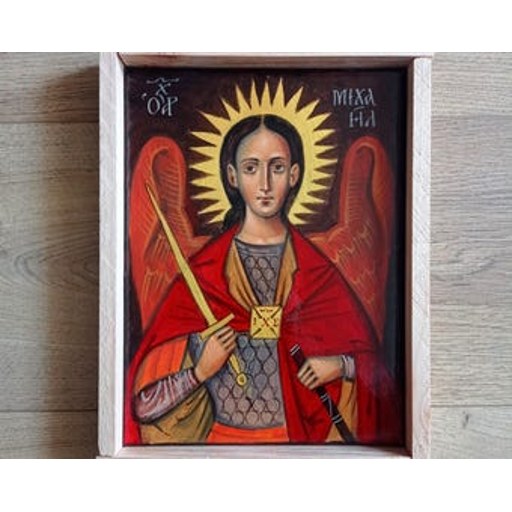
https://etsy.com/listing/1536404124/christ-pantocrator-picture-icon-painting
License: unknown
Dioscoredes
Saint- Church
- Catholic
Biography
The name Dioscoredes does not correspond to any figure whose life can be reconstructed from reliable historical or hagiographical sources under that exact spelling. The principal Western and Eastern calendars—the Roman Martyrology, the Byzantine synaxaria, the Coptic and Syriac synaxaria, and the great early-modern compilations such as the Acta Sanctorum—do not record a saint, bishop, monk, or founder securely attested as Dioscoredes. Without a dated notice, an inscription, a consistent liturgical entry, or a scholarly identification tied to primary evidence, no birth year, death year, place of origin or burial, or ecclesiastical career can be assigned. The historical method requires that those fields remain blank rather than be filled by analogy or conjecture.
Names of closely similar form do appear in late antique Christian and medical literature and are easily confused in manuscript transmission. Dioscorus (Greek Dioskoros) is borne by several Egyptian martyrs of the Roman persecutions, among them a lector commemorated in some calendars, and most prominently by Dioscorus I, patriarch of Alexandria in the mid-fifth century, whose deposition at the Council of Chalcedon in 451 remains a defining event for the Oriental Orthodox churches. Separately, Pedanius Dioscorides of Anazarbus, a first-century Greek physician and author of the pharmacological treatise De materia medica, was copied and studied for centuries in Christian monasteries; his name is Latinized in various ways approaching Dioscorides, but he was not a Christian saint and received neither liturgical cult nor canonization. None of these persons is documented under the precise form Dioscoredes, and identifying the present subject with any of them would be speculative.
Because the subject cannot be identified with a documented individual, statements about marriage or celibacy, children, religious profession, papal or patriarchal office, feast day, patronage, or acts of beatification and canonization cannot be verified. Hagiographical tradition frequently preserves variant spellings, scribal corruptions, and strictly local cults that never entered the major calendars; it is possible that Dioscoredes reflects such a local or corrupted form. Without a manuscript witness, a calendar entry, or an archaeological attestation established in the standard reference works, those possibilities remain unproven. Historians of sanctity therefore record only the absence of reliable data attaching birth, death, places, or office to the name as given.