Doamna Despina Milița is a saint of the Catholic Church (d. 1554).
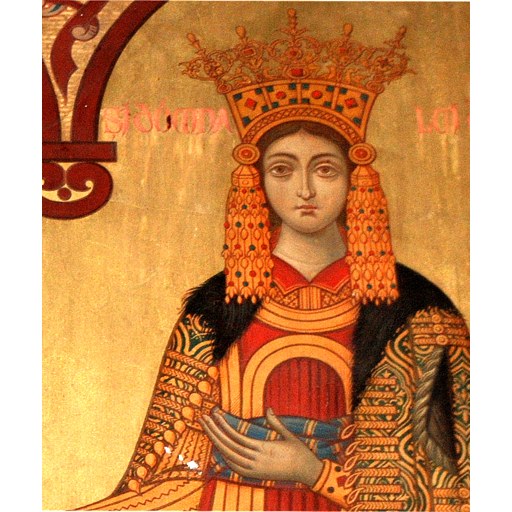
Ancahm
License: CC BY-SA 3.0
Doamna Despina Milița
Saint- Life Span
- d. 1554
- Gender
- female
- Church
- Catholic
Places
Roles & Family
Religious Information
Biography
Milica Despina, known in Romanian sources as Doamna Despina Milița or Milița Despina, was a princess of Serbian origin who became Princess consort of Wallachia by marriage to Neagoe Basarab, voivode of Wallachia from 1512 to 1521. Her exact parentage is not securely documented and remains debated among historians. She has been linked to the Branković dynasty, sometimes as a daughter or kinswoman of Despot Jovan Branković, and alternatively to the Serbian noble family of Jakšić. What can be stated with confidence is that she belonged to the Serbian Orthodox high nobility and that her marriage connected the Wallachian court to the prestige of the Balkan Christian dynasties that had survived the Ottoman conquest of the Serbian lands. The marriage took place in the early sixteenth century, before or around the time of Neagoe’s accession. The couple had several children, among them Teodosie, who briefly succeeded his father, and daughters including Ruxandra and Stana; a son named Petru and a daughter Anghelina also appear in genealogical reconstructions.
During Neagoe Basarab’s reign, Wallachia saw a notable flowering of ecclesiastical architecture, letters, and Orthodox patronage. Neagoe founded the monastery church at Curtea de Argeș, among the most important monuments of the period, and is associated with the didactic work known as the Teachings of Neagoe Basarab to his son Theodosie. Despina Milița shared this climate of princely piety and endowment. The court maintained relations with Mount Athos and with Serbian and other Orthodox centres, and her Serbian origin made her a natural intermediary with the South Slavic Orthodox world. Contemporary impressions and later tradition present her as a devout consort rather than as an independent political actor during her husband’s lifetime.
Neagoe Basarab died in September 1521. Their son Teodosie was placed on the throne as a child, and Despina Milița served as regent. The regency was immediately undermined by boyar rivalries and by competing claimants, above all Radu of Afumați. Teodosie died in 1522. Despina and her remaining children were compelled to leave Wallachia. She took refuge in Transylvania, where Saxon towns such as Sibiu (Hermannstadt) offered a relatively secure setting for Orthodox princely exiles. From Transylvania she continued to protect the prospects of her daughters. Ruxandra married Radu of Afumați, who ruled Wallachia in the 1520s, thereby restoring a family tie to the princely office. In widowhood Despina Milița embraced the monastic life and received the name Platonida, in keeping with a well-established Orthodox custom among royal widows.
She died in 1554, the year generally given in modern reference works, having spent her last decades as a nun of standing and a benefactress of the Church. Her place of burial is not established with certainty. Although her husband Neagoe Basarab was canonized by the Romanian Orthodox Church in 2008, Despina Milița has not been the subject of a comparable official canonization, and she should not be confused with the earlier Serbian saint Princess Milica (the nun Eugenia), wife of Prince Lazar. Despina Milița’s historical importance rests on her role as consort and brief regent of Wallachia, on the Serbian dynastic connection she embodied, and on her participation in the religious culture of the early sixteenth-century Wallachian court.