Domangart is a saint of the Catholic Church. Domangart's feast day is celebrated on 24 March.
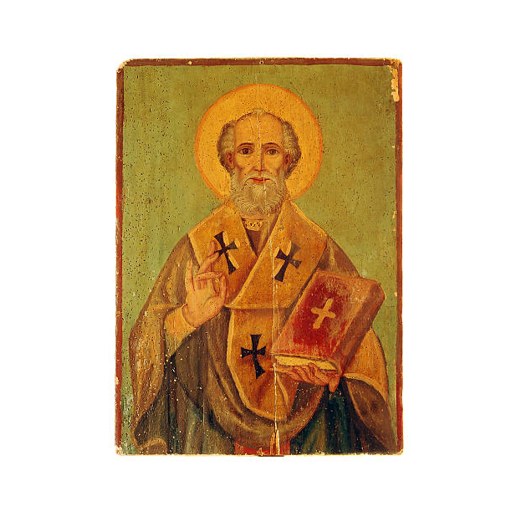
https://www.istockphoto.com/illustrations/saint-portrait
License: unknown
Domangart
Saint- Feast Day
- 24 March
- Gender
- male
- Church
- Catholic
Places
Roles & Family
Biography
Domangart (also written Domhanghart, Domhangart, or in anglicized form Donard) was an early Irish saint whose memory is tied to the territory of the Ulaid in what is now County Down. Later genealogical tradition places him among the descendants of Eochaid, son of Muiredach, and thus among the royal kindreds of Ulster. He is counted with the generation of holy men associated, in medieval Irish tradition, with the fifth-century mission of Saint Patrick. No contemporary narrative of his life exists. The notices that survive come from martyrologies compiled centuries afterward, from genealogies, from place-name evidence, and from local ecclesiastical memory.
The chief site linked with him is Rath Murbhuilg, identified with the early church of Maghera at the northern foot of the Mourne Mountains. There he is said to have founded a church or monastic settlement. A more distinctive tradition locates a hermitage or small oratory on the summit of the mountain that took his name, Slieve Donard (Sliabh Dónairt or Sliabh Domhanghairt), the highest peak in the region. He is therefore remembered both as a monastic founder in the lowland church and as an eremite on the mountain. Later pilgrimage to the summit and reports of early structures there belong to the history of his cult rather than to independently dated archaeology.
Irish calendars commemorate him on 24 March. The Martyrology of Tallaght, later notes on the Félire Óengusso, the Martyrology of Gorman, and the Martyrology of Donegal all enter Domhangart of Rath Murbhuilg on that day, sometimes calling him bishop. In the early Irish church that title need not imply a later-style territorial diocese; it may indicate the status of a monastic founder. He belongs to indigenous Irish monastic and eremitical Christianity and is not associated with any of the later religious orders of the Latin West.
His cult remained essentially local, focused on Maghera and on the mountain. No substantial medieval Latin Life is known, which helps explain his relative obscurity outside Ulster tradition. Compilers of saints’ calendars in the modern period sometimes assigned him a death at the beginning of the sixth century, but those figures rest on late synchronisms, not on contemporary annals, and are not historically secure. What can be said with caution is that Domangart was remembered as a holy man of the Patrician age whose name became fixed to a major mountain and to an early church at its foot.