Domitien du Bugey is a saint of the Catholic Church. Domitien du Bugey's feast day is celebrated on July 1.
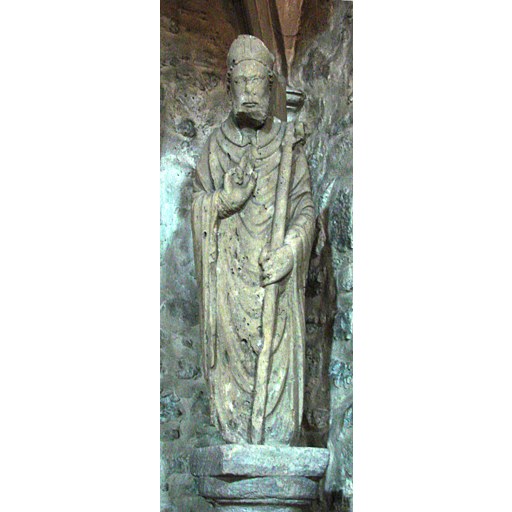
Classiccardinal
License: CC BY-SA 3.0
Domitien du Bugey
Saint- Feast Day
- July 1
- Gender
- male
- Church
- Catholic
Places
Roles & Family
Biography
Saint Domitien, known in later local usage as Domitien du Bugey, is an obscure Gallic monastic saint commemorated on 1 July. The principal ancient notice of him is the entry in the Roman Martyrology, which records, in the territory of Lyons (in territorio Lugdunensi), Saint Domitian, abbot, who was the first to lead an eremitical life there. No contemporary vita, dated acts, letters, or inscriptions survive, and no year of birth or death can be established from evidence that meets a historical standard. Hagiographical tradition places him in the fifth century, during the period when organized eremitical and coenobitic life was taking root in south-eastern Gaul.
The region indicated by the martyrology is the ancient Lyonnais, adjoining the Bugey, a mountainous district of the southern Jura foothills in what is now the department of Ain. In the fifth century this landscape lay within the Burgundian kingdom. The same century saw the foundation of the nearby Jura monasteries of Condat and Lauconne by Saints Romanus and Lupicinus, together with the wider influence of Lérins and of Martinian monasticism. Domitien’s designation as the first hermit of the Lyons territory situates him within that monastic flowering, although no source documents a personal link between him and those better-attested communities.
The title of abbot attached to his name implies the familiar late-antique pattern in which a solitary attracted disciples and was obliged to organize them into a community. Beyond that inference, the circumstances of his ascesis, any rule he may have followed, and the later fate of a house he governed remain unknown. Early Gallic monasticism in this zone was not Benedictine: the Rule of Benedict of Nursia belongs to the sixth century and spread in Gaul only later. Later ages sometimes associated ancient local abbots with Benedictine houses that later occupied the same countryside, but such identifications are retrospective and unverified for Domitien.
His cult remained modest. Inclusion in the Roman Martyrology gave him a place in the general calendar of the Latin Church, and local calendars of the Lyonnais and of Bugey retained his name. No medieval miracle collection, no securely identified tomb, and no surviving shrine topography allow a more precise map of his veneration. He is to be distinguished from other saints of the same name, above all Domitian of Tongeren-Maastricht (Domitien de Huy), a sixth-century bishop whose feast falls on 7 May, and from Eastern figures such as Domitian of Melitene.
Because almost nothing can be verified about his family, education, or the internal history of his community, notices that supply exact dates, a noble genealogy, or dramatic episodes should be treated as later embellishment. What can be said with caution is that a fifth-century abbot-hermit named Domitian was remembered in the church of Lyons as the pioneer of the eremitical life in its territory, and that Bugey tradition has continued to count him among the early monastic saints of the Ain.