Domne Eafe is a saint of the Catholic Church. Domne Eafe's feast day is celebrated on 19 November.
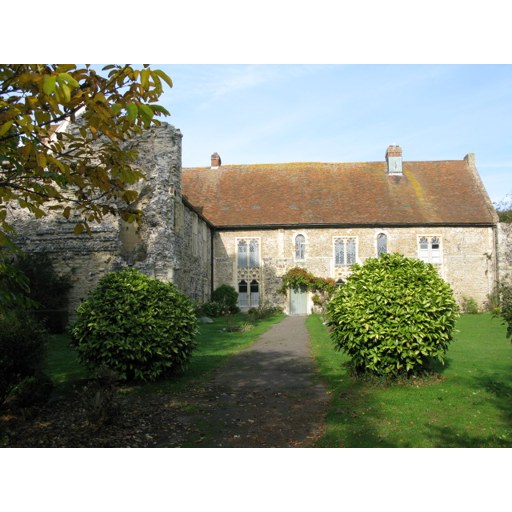
Nick Smith
License: CC BY-SA 2.0
Domne Eafe
Saint- Feast Day
- 19 November
- Gender
- female
- Church
- Catholic
Places
Roles & Family
Religious Information
Biography
Domne Eafe, also known as Domneva, Eafe, Æbbe, or in some medieval sources Eormenburh (Ermenburga), was a seventh-century Anglo-Saxon princess of the Kingdom of Kent and the foundress and first abbess of the monastery at Minster-in-Thanet. She belonged to the Kentish royal dynasty descended from King Æthelberht, the first Christian king of Kent. Her father was Eormenred, a son of King Eadbald of Kent; later genealogical texts name her mother as Oslafa. Eormenred is presented in the Kentish royal legend as a king or prince whose sons did not succeed to the Kentish throne. Domne Eafe’s brothers Æthelred and Æthelberht were subsequently venerated as martyrs. Precise dates of her birth and death are not recorded in contemporary documents. She is known chiefly from later hagiographical and legendary texts rather than from Bede or other seventh-century writers, and modern historians therefore treat many narrative details with caution while accepting a historical core.
She married Merewalh, ruler of the Magonsæte, a Mercian sub-kingdom in the west of what is now England, in the region of the modern counties of Herefordshire and Shropshire. Merewalh is described in later tradition as a son of the Mercian king Penda and as a convert to Christianity. The marriage produced several children who entered the religious life and were later venerated as saints: Mildburh (Mildburg), who became abbess of Wenlock; Mildrith (Mildred), who became abbess of Minster-in-Thanet after her mother; and Mildgyth, who became a nun, according to some accounts in Northumbria. Some versions of the legend also mention a son named Merefin, said to have died in childhood. Through this marriage Domne Eafe linked the Kentish royal house with a Mercian princely family, a dynastic connection typical of seventh-century English politics. After her years as a wife and mother she adopted the monastic life, a pattern found among other high-born women of the conversion-era kingdoms.
According to the Kentish Royal Legend, a body of related Old English and Latin texts preserved in later medieval manuscripts, Domne Eafe’s young brothers Æthelred and Æthelberht were murdered at the royal vill of Eastry while under the protection of their cousin King Ecgberht of Kent. The legend names a royal counsellor called Thunor as the killer and implies royal complicity or negligence. In compensation for the slaying, Ecgberht granted Domne Eafe land on the Isle of Thanet as wergild. A well-known episode relates that the bounds of the grant were fixed by the course of her tame hind, which ran across a portion of the island; the deer later appeared in the traditional arms associated with Thanet. On the land so obtained she founded a double monastery at Minster-in-Thanet, generally placed in the later seventh century, during or shortly after Ecgberht’s reign (he died in 673). The tale that the earth swallowed Thunor at a place called Thunor’s Leap belongs to the legendary rather than the demonstrably historical layer of the tradition.
Domne Eafe became the first abbess of Minster-in-Thanet. She was succeeded by her daughter Mildrith, who according to the legend had been sent for education to the Frankish monastery of Chelles. Minster-in-Thanet became an important religious house and a centre of the cult of Mildrith. Domne Eafe herself was remembered as a saint in medieval England, often under the name Ermenburga, and a feast on 19 November is associated with that cult in some calendars, though not all modern historians accept that Domne Eafe and Eormenburh are the same person; some medieval genealogies list them as sisters, and the style “Domne Eafe” may represent a title plus name, “Lady Eafe.” No contemporary record of a papal canonization exists; her sanctity, like that of many early English royal abbesses, rests on local veneration and later legend. Surviving knowledge of her life depends largely on the Mildrith legend and related genealogical texts of the tenth and eleventh centuries, which mix historical memory of Kentish and Mercian dynastic relations with hagiographical narrative. Historians generally regard as plausible the core facts of her royal birth, marriage to Merewalh, motherhood of the Thanet and Wenlock abbesses, and foundation of Minster-in-Thanet, while treating miraculous and folkloric details as later elaboration.