Dorotheus of Gaza is a venerable of the Catholic Church. Dorotheus of Gaza's feast day is celebrated on 5 June.
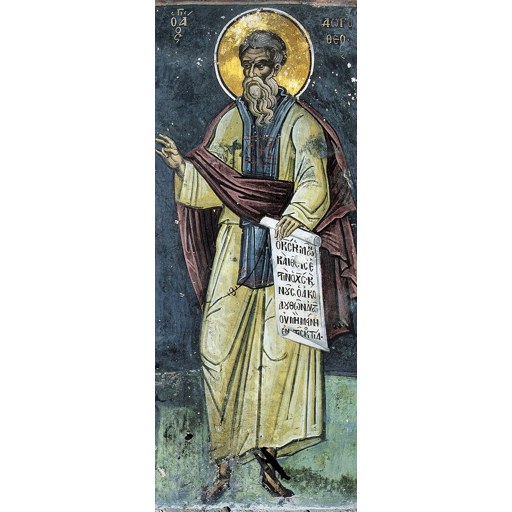
AnonymousUnknown author
License: Public domain
Dorotheus of Gaza
Venerable- Feast Day
- 5 June
- Gender
- male
- Church
- Catholic
Places
Roles & Family
Biography
Dorotheus of Gaza, also known as Abba Dorotheus or Dorotheos, was a Christian monk, abbot, and spiritual writer of the sixth century. He was born in Antioch, in Syria, to a Christian family of comfortable means and received a thorough education that included medical training, a skill he later used in the monastery. Drawn to the ascetic life, he left Antioch for the region of Gaza in Palestine, where he entered the monastery of Abba Seridos (Serid), a community closely associated with two famous recluses, Barsanuphius (the Great Old Man) and John the Prophet (the Other Old Man).
At Seridos’s monastery Dorotheus became a disciple of Barsanuphius and John. Those two elders lived in strict seclusion and communicated with the brethren mainly by letter and through intermediaries. Dorotheus served for a time as their attendant and messenger, carrying questions from the monks and returning with the elders’ answers. He also acted as the community’s infirmarian. The large surviving correspondence of Barsanuphius and John includes many letters connected with Dorotheus and documents his early monastic formation. After the deaths of Barsanuphius, John, and Abba Seridos around the middle of the sixth century, Dorotheus left that house and founded his own monastery nearby, between Gaza and the port of Maiuma, where he served as abbot.
In that later period he composed the works for which he is best known: a series of instructions or discourses (commonly counted as seventeen or eighteen) addressed to his monks, together with a number of letters. The discourses treat practical themes of cenobitic life—humility, the cutting off of self-will, obedience, the struggle against the passions, and the growth of love for God and neighbor—in a moderate, psychologically acute, and pastoral style. They became widely read in the Christian East, were translated into Georgian, Arabic, Slavonic, and other languages, and influenced later Byzantine and Slavic monastic spirituality.
Precise years of his birth and death are not securely attested; he belongs firmly to the sixth-century Gaza monastic tradition and is generally placed in the later decades of that century. He is venerated as a saint in the Eastern Orthodox Church, which commemorates him on 5 June. Little is recorded about the place of his burial, which was presumably at or near the monastery he founded.