Earl Joseph is a saint of the Catholic Church.
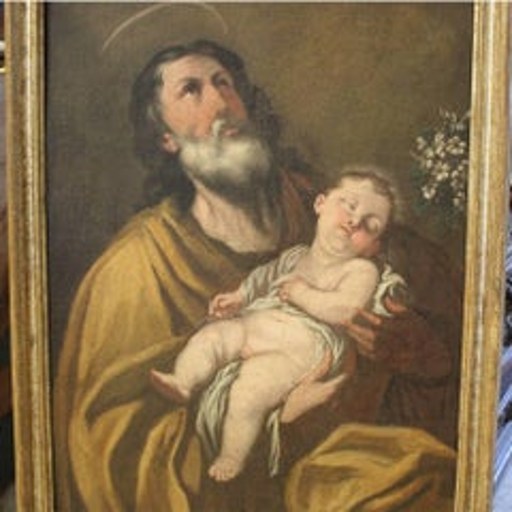
https://www.1stdibs.com/buy/saint-joseph-painting/
License: unknown
Earl Joseph
Saint- Gender
- male
- Church
- Catholic
Roles & Family
Biography
No figure named Earl Joseph is attested in the principal martyrologies, synaxaria, episcopal catalogues, or standard dictionaries of saints of the Catholic, Eastern Orthodox, Oriental Orthodox, Church of the East, or Anglican traditions. The forename Earl is of English linguistic origin and is characteristic of modern English-speaking usage rather than of the Latin, Greek, Syriac, Coptic, Slavic, or medieval vernacular naming patterns that dominate historical hagiography. Joseph, by contrast, is among the most frequently occurring names in Christian sanctity, borne by the spouse of Mary of Nazareth and by many later bishops, monks, and martyrs; the two-name combination “Earl Joseph,” however, does not correspond to any holy person whose cult, vita, liturgical commemoration, or process of beatification or canonization can be verified from reliable published sources.
In the absence of a Wikidata identifier, a stable encyclopedia article, a named diocese or religious house, or a clearly identified century and region, it is not possible to place this subject in a particular historical setting. Consultation of familiar reference collections—including the Roman Martyrology, Alban Butler’s Lives of the Saints, the Bibliotheca Hagiographica Latina and Bibliotheca Hagiographica Graeca, and standard encyclopedias of church history—does not yield a saint, blessed, venerable, or servant of God under this exact name. The name is therefore most plausibly that of a private individual who has not been the object of public ecclesiastical cult, of a strictly local or family remembrance that has not entered the scholarly record, or of a confusion with one of the many well-documented saints named Joseph.
Because no vita, necrology, episcopal list, or civil register can be securely attached to Earl Joseph, a year of birth, a year of death, places of origin and burial, and details of family life cannot be stated without invention. There is no evidence that anyone of this name occupied the see of Rome or a patriarchal or catholicosal throne of the Orthodox, Oriental Orthodox, Coptic, or Church of the East communions. Affiliation with a named religious order, a documented marriage or celibate profession, and the existence or non-existence of children are likewise unattested. No feast day, patronage, or act of beatification or canonization appears in the sources available to general historical inquiry.
Readers in search of a Joseph of Christian history should turn to figures whose lives rest on identifiable texts and cult: Joseph of Nazareth; Joseph of Arimathea; Joseph the Hymnographer; Joseph of Cupertino; and other similarly named bishops, monks, and martyrs of East and West. For Earl Joseph specifically, intellectual honesty requires leaving the biographical fields blank rather than supplying conjectural dates, offices, or places. If further primary evidence—an archival vita, a diocesan process, or a clearly identified local cult—should come to light, the record could be revised; until then, silence is preferable to speculation.