Edistus is a saint of the Catholic Church. Edistus's feast day is celebrated on October 12.
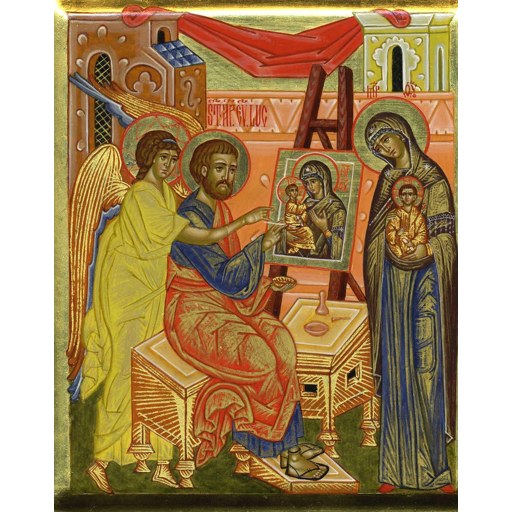
https://dailyartmagazine.com/saint-luke-the-ultimate-holy-painter
License: unknown
Edistus
Saint- Feast Day
- October 12
- Gender
- male
- Church
- Catholic
Places
Roles & Family
Biography
Edistus, also known in Latin sources as Aristus or Hedistus and in Italian as Sant'Edisto, is a Christian martyr of Rome commemorated by the Catholic Church. The Roman Martyrology records his feast on 12 October with a terse notice that he was martyred on the Via Laurentina, the ancient road running south from Rome toward Laurentum. No contemporary historical document describes his life or death. The biographical particulars that circulate in later hagiography derive from a Passio composed well after the events it purports to recount, and modern scholars treat that narrative as legendary rather than as a reliable historical source. Tradition situates the martyrdom in the first century, in the time of the emperor Nero, but that chronology rests on the Passio alone.
According to the legendary Passio Sancti Edisti, Edistus was of noble Roman birth and served as an official or soldier at Nero's imperial court. He is said to have been converted to Christianity and baptized by the apostle Peter. After Peter's execution, the story continues, Edistus openly confessed the Christian faith, was arrested, endured torture, and was finally beheaded on the Via Laurentina. Later versions of the legend sometimes add companions in martyrdom, but the Martyrology commemorates Edistus by himself. None of these details can be confirmed independently, and they follow a pattern common to many medieval Roman martyr acts that sought to connect local cults with the apostolic age and with Nero's persecution.
Despite the unreliability of the Passio, the cult of Edistus is attested in Rome from an early medieval date and probably has late antique roots. A church or basilica dedicated to him stood on the Via Laurentina, and the Liber Pontificalis and related sources mention this sanctuary. In the eighth century Pope Gregory III is recorded as having restored a monastery of Saint Edistus in the same district, which indicates that a community of monks had gathered around the martyr's shrine. The persistence of the name in the Roman liturgical books and the existence of the Laurentine sanctuary are the principal historical facts that can be affirmed: a martyr named Edistus was venerated on the Via Laurentina, and his tomb or memoria became a place of worship.
Beyond these points, almost everything remains unknown. There is no verified year of birth or death, no documented information about a spouse or children, and no evidence that Edistus held episcopal office or belonged to a religious order. He was neither pope nor patriarch. No comprehensive list of patronages is attached to his name in the major martyrologies or in standard hagiographical reference works. His historical profile is therefore that of an obscure Roman martyr whose memory survived through a local shrine and a brief entry in the Martyrology, while the colorful court-and-apostle story attached to him belongs to the realm of pious legend rather than to recoverable biography.