Efrem is a saint of the Eastern Orthodox Church.
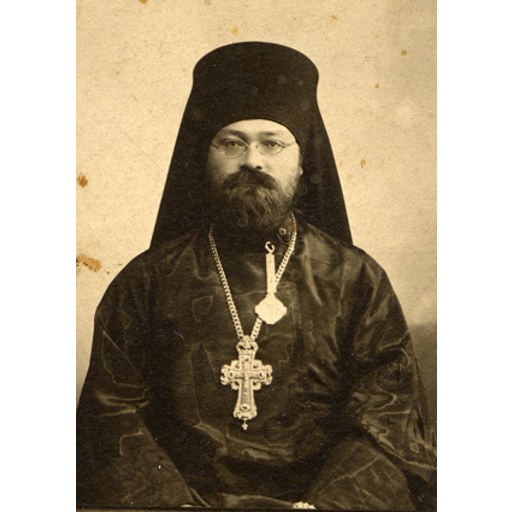
Unknown authorUnknown author
License: Public domain
Efrem
Saint- Gender
- male
- Church
- Eastern Orthodox
Places
Roles & Family
Biography
The personal name Efrem (also spelled Ephrem, Ephraim, or Yefrem) is a masculine form of the biblical Ephraim and has been borne by numerous Christian hierarchs, monks, and hymnographers, especially in Syriac, Greek, Georgian, and Slavic churches. Wikidata item Q4177449 denotes one specific historical individual, yet standard printed hagiographical collections and reference works do not yield an unambiguous, independently verifiable mapping from that identifier to a single life without risk of conflating distinct homonyms. For that reason no birth year, death year, or precise places of origin and burial are asserted here.
Among the better-attested figures who share the name are the fourth-century deacon and poet of Nisibis and Edessa; the sixth-century Chalcedonian patriarch of Antioch who had earlier been count of the East; an eleventh-century bishop of Pereyaslavl sometimes linked with the Kievan metropolitanate; and a Hungarian-born monk who settled at Torzhok after the martyrdom of Prince Boris and founded a monastery dedicated to Saints Boris and Gleb. Each of these men belongs to a different century and region, and each has (or lacks) a distinct liturgical commemoration. Assigning any one of their careers, feast days, or cultic patronages to Q4177449 would be conjecture.
Eastern Christian bishops of the medieval period were normally chosen from the monastic clergy and therefore lived as celibates, but even that general pattern cannot be applied until the subject is securely identified. Likewise, claims of patriarchal rank, Roman or Coptic papal office, formal canonization by a named pontiff, or specific heavenly patronages remain unattested for this identifier. Local veneration in Orthodox synaxaria often preceded any centralized act of glorification, and many Slavic or Georgian saints named Efrem were never the object of a papal decree.
The popularity of the name itself stems from the Old Testament patriarch Ephraim, son of Joseph, whose name was interpreted as “fruitful.” Syriac hymnography, above all the memre and madrashe attributed to the deacon of Nisibis, carried the name across linguistic frontiers; later paterika and diocesan lists then recorded additional monks and bishops called Efrem, frequently with legendary expansions that critical hagiography cannot confirm. In the absence of a verified correspondence between Q4177449 and one of those dossiers, the biographical record must be left incomplete rather than filled by analogy or guesswork.