Egyptian is a saint of the Catholic Church.
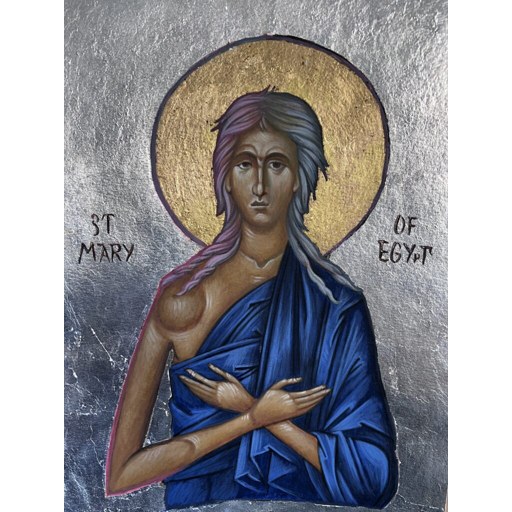
https://edinburghiconpainting.org/uncategorized/icon-saint-mary-of-egypt
License: unknown
Egyptian
Saint- Church
- Catholic
Biography
The designation “Egyptian” is not by itself a verified personal name, papal or patriarchal title, or uniquely identifiable saint in the historical record. Without a given name, a see, a feast, a Wikidata identifier, or another distinguishing mark, it is not possible to attach a birth year, death year, family, office, or cult to a single individual. Late antique and medieval sources use “the Egyptian” as an epithet for many different people—anchorites of the Thebaid and Scetis, Coptic hierarchs, and later commemorations—so the label alone cannot be treated as a biography.
Egypt was a principal cradle of Christian monasticism from the third and fourth centuries. Writers such as Athanasius, Palladius, and John Cassian describe communities in Nitria, Kellia, and Scetis and solitary lives in the desert, but they name specific figures (Antony, Macarius, Pachomius, and others) rather than a person known only as “Egyptian.” Coptic tradition likewise preserves lists of patriarchs of Alexandria and numerous local martyrs and monks; each of those lives is tied to a proper name, a place of burial, or a liturgical commemoration. None of those dossiers can be assigned here without inventing an identity the sources do not support.
Hagiographical practice requires that dates of birth not be inferred from the year someone took office, that marriage and children be documented rather than assumed from clerical status, and that patronage, canonization, and feast days rest on identifiable cult. Because no such dossier attaches to the bare word “Egyptian,” those fields remain empty. If a particular Egyptian saint, monk, or hierarch is intended, a name, see, or feast would be needed before any of the requested facts could be verified from reliable historical sources.