Eleanor of Provence is a saint of the Catholic Church (1223 - 1291).
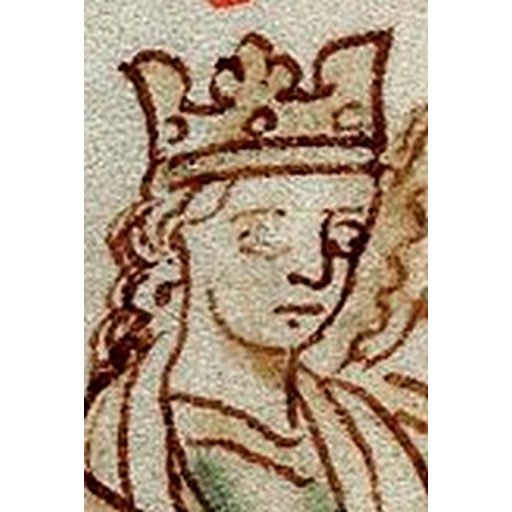
Matthew Paris
License: Public domain
Eleanor of Provence
Saint- Life Span
- 1223 - 1291 (age 68)
- Gender
- female
- Church
- Catholic
Places
Relics & Where to Venerate
Location unknown
The bodily remains of Eleanor of Provence are a first-class relic. Venerated at Amesbury Abbey.
Roles & Family
Religious Information
Biography
Eleanor of Provence was born about 1223 at Aix-en-Provence, the second of the four daughters of Ramon Berenguer IV, Count of Provence, and Beatrice of Savoy. The comital court of Provence was among the most cultivated in thirteenth-century Europe, famed for its wealth, its troubadour culture, and its web of marriage alliances. Eleanor's sisters all became queens: Margaret married Louis IX of France; Sanchia married Richard of Cornwall, brother of the English king and later King of the Romans; and Beatrice married Charles of Anjou, who conquered the kingdom of Sicily. These four Provençal marriages formed one of the most striking dynastic clusters of the High Middle Ages and bound England, France, the Empire, and southern Italy into a single family network.
On 14 January 1236 she was married to King Henry III of England at Canterbury Cathedral and was crowned queen at Westminster Abbey. Still only in her early teens, she entered a court already marked by the king's piety, his artistic patronage, and his financial difficulties. The marriage produced several children, of whom Edward (the future Edward I), Margaret (queen of Scots as wife of Alexander III), Beatrice (who married John II, Duke of Brittany), Edmund Crouchback (earl of Lancaster), and Katherine (who died in childhood) are securely attested. Eleanor was a notable patron of literature and of religious houses and shared Henry's devotion to Saint Edward the Confessor and to the great rebuilding of Westminster Abbey. She also brought to England a large Savoyard kindred. Uncles and cousins, including Peter of Savoy and Boniface of Savoy, who became archbishop of Canterbury, received lands, wardships, and offices. Their advancement, together with that of the king's Lusignan half-brothers, provoked deep baronial and urban hostility and made the queen herself a focus of unpopularity, especially in London.
Eleanor was no mere ceremonial consort. She served as regent during Henry's expedition to Gascony in 1253 and 1254 and consistently supported a strong interpretation of royal rights. During the political collapse that followed the Provisions of Oxford and in the Second Barons' War she worked to sustain the royalist cause, raising men and money on the Continent. In 1263, while attempting to pass by barge from the Tower of London toward Windsor, she was attacked with stones and insults by a London crowd at London Bridge and compelled to return to the Tower, an episode recorded by contemporary chroniclers as evidence of the city's hatred. After the royalist victory at Evesham in 1265 her fortunes revived with those of the crown. Henry III died in November 1272. As queen dowager, Eleanor continued to administer a large dower estate with energy and remained a presence at the court of her son Edward I.
In later life she withdrew from politics. She took a widow's vow of chastity and in 1286 entered the Fontevraudine priory of Amesbury in Wiltshire, a house long associated with the Plantagenet family; her granddaughter Mary of Woodstock was already a nun there. Eleanor died at Amesbury in June 1291 and was buried in the priory church. She was never canonized and has no liturgical feast, but she remains a central figure in the political and cultural history of thirteenth-century England: a Provençal princess whose family connections, artistic tastes, and determined defence of her husband and children left a lasting mark on the Plantagenet monarchy.