Elena of Moscow is a venerable of the Catholic Church.
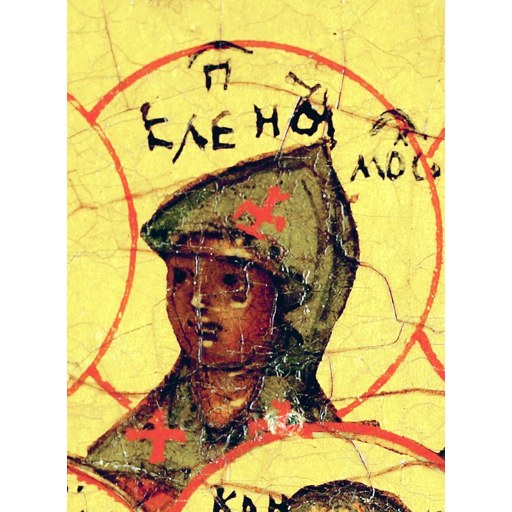
anonimus
License: Public domain
Elena of Moscow
Venerable- Gender
- female
- Church
- Catholic
Roles & Family
Biography
Elena of Moscow, listed in some databases under Wikidata item Q16648107, is a poorly documented historical personage. Standard reference works, the principal chronicles of the Grand Duchy of Moscow, and major hagiographical collections do not yield a clearly matching biography that can be verified with certainty. The feminine given name Elena, the Slavic form of Helena, was frequently used among the Rurikid and later princely families of northeastern Rus' from the fourteenth century onward, which makes unique identification difficult without a patronymic, a precise title, or a recorded liturgical commemoration.
Women of this name who were associated with Moscow typically belonged to the grand-princely court. They might have been daughters given in marriage to neighboring rulers in order to secure political alliances, or they might have been consorts who, after widowhood, retired to one of the convents of the city such as the Ascension Convent in the Kremlin. Such a pattern is well attested for other Muscovite princesses, yet no specific chronicle entry, donation charter, or liturgical notice can be securely attached to the subject of this entry.
No evidence has been located that this Elena held high ecclesiastical office, which would in any case have been impossible for a woman in the Orthodox or Catholic hierarchies of the period. Likewise, claims of formal canonization or beatification, a designated feast day, or recognized patronages cannot be substantiated from published synaxaria or from the official calendars of the Russian Orthodox Church. If local veneration ever existed, it has not left a trace in the sources commonly consulted by historians.
In the absence of verifiable dates of birth or death, places of origin or burial, marital status, or offspring, any fuller reconstruction would require conjecture. The present account therefore confines itself to noting the cultural and dynastic milieu in which a woman called Elena of Moscow might have lived, while underscoring that the individual record remains essentially blank. Future examination of unpublished archival material from Moscow repositories could conceivably alter this assessment, but until such evidence appears, caution remains the appropriate scholarly stance.