Eleonora Aniela Jóźwik is a saint of the Catholic Church.
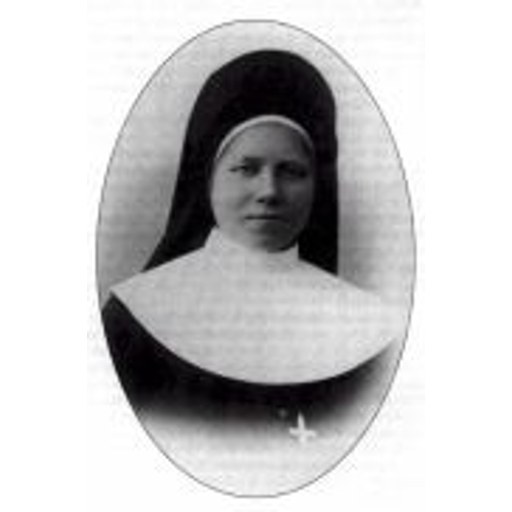
op unknown
License: Public domain
Eleonora Aniela Jóźwik
Saint- Gender
- female
- Church
- Catholic
Places
Roles & Family
Biography
Eleonora Aniela Jóźwik is associated with the Wikidata identifier Q4534236, but she does not appear in the major English-language encyclopedias, national biographical dictionaries, martyrologies, or standard catalogues of saints and blesseds that ordinarily underpin a hagiographical notice. The given names Eleonora and Aniela together with the surname Jóźwik are characteristically Polish, which places her, at least onomastically, in a Polish linguistic and cultural setting. That indication alone does not establish a birthplace, a century of activity, or a documented public role, and no independently corroborated civil, parish, or published biographical record has been identified that would fix those facts.
No newspaper obituary, diocesan necrology, congregational chronicle, or scholarly monograph available for this compilation reconstructs her education, occupation, or family circumstances. It is therefore not possible to state whether she lived as a laywoman or as a member of a religious institute, whether she married, or whether she had children. Any assertion of religious profession, a particular congregation, a spouse, or offspring would be conjectural and is omitted. She held neither the see of Rome nor any patriarchal or catholicosal office of the Orthodox, Oriental Orthodox, Coptic, or Church of the East traditions.
She is not found under this name among the canonized saints of the Catholic Church, nor among the blesseds most often associated with Poland, including the large group of martyrs of the Second World War beatified by Pope John Paul II. Standard published lists of those 108 blesseds, and the Roman Martyrology as commonly cited, do not attach a feast, a patronage, or a decree of beatification or canonization to Eleonora Aniela Jóźwik. Accordingly those fields cannot be filled from verified ecclesiastical sources.
In the absence of parish registers, civil archives, or internal records of a religious institute that could be cited here, this notice is necessarily a statement of the limits of publicly confirmed knowledge rather than a narrative of events. Further work in Polish regional, diocesan, or congregational archives might yet produce a documented life; until such evidence is published and independently corroborated, the biographical particulars required by a conventional hagiographical schema remain unknown and are left blank rather than guessed.