Elisha is a saint of the Catholic Church. Elisha's feast day is celebrated on 14 June.
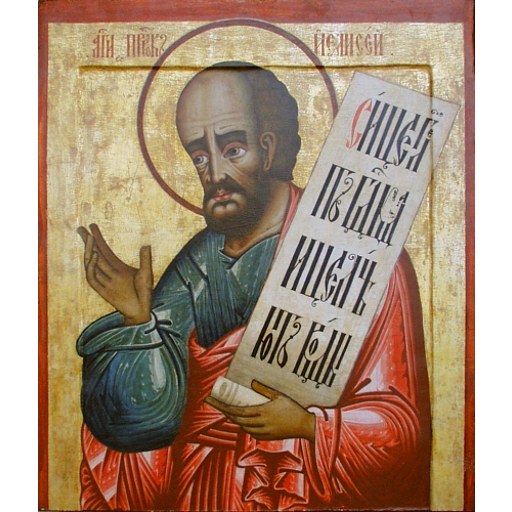
18 century icon painter
License: Public domain
Elisha
Saint- Feast Day
- 14 June
- Gender
- male
- Church
- Catholic
Places
Roles & Family
Biography
Elisha, whose name in Hebrew is commonly interpreted as 'God is salvation' or 'My God is salvation,' was a prophet in the northern Kingdom of Israel during the ninth century BCE. The principal sources for his life are the First and Second Books of Kings in the Hebrew Bible. He is introduced as the son of Shaphat, from Abel-meholah, a town in the Jordan Valley. The narrative of 1 Kings 19 describes the prophet Elijah, acting on a divine command, finding Elisha at the plough with twelve yoke of oxen and casting his cloak over him. Elisha asked leave to bid farewell to his parents, then slaughtered the oxen, burned the ploughing equipment to cook the meat, distributed it to the people, and set out to follow Elijah. The scale of the agricultural operation suggests a family of some substance rather than a landless laborer.
Elisha served as Elijah's attendant until the latter's departure, which the biblical text describes as an ascent in a whirlwind. At the Jordan, Elisha requested a double portion of Elijah's spirit, the share of a firstborn heir. After witnessing Elijah's taking up, he took up the fallen mantle, struck the river, and crossed on dry ground, an act that the watching sons of the prophets interpreted as the transfer of prophetic authority. Thereafter Elisha appears as the leading figure among these prophetic bands, which were settled at places such as Bethel, Jericho, and Gilgal. Early signs attributed to him include the healing of Jericho's water with salt and a curse upon a group of youths at Bethel that is followed by an attack by bears, an episode that has long been the subject of moral and historical debate.
The cycle of stories in 2 Kings ascribes to Elisha numerous wonders of provision, healing, and control over nature. He multiplied a poor widow's oil so that she could pay her debts; promised a child to a childless Shunammite woman who had given him lodging and later restored that child to life; purified a poisoned pot of stew; fed a hundred men with twenty barley loaves; and caused an iron axe-head to float. The most widely known of these accounts is the healing of Naaman, commander of the army of Aram, who was instructed to wash seven times in the Jordan and was cleansed of leprosy. When Elisha's servant Gehazi secretly accepted gifts from Naaman, the prophet declared that the leprosy would cling to Gehazi and his descendants. These narratives present Elisha as a prophet whose power was exercised both for Israelites and for foreigners, and whose integrity was sharply distinguished from the greed of his servant.
Elisha's ministry coincided with the reigns of several kings of Israel, including Jehoram son of Ahab, Jehu, Jehoahaz, and Jehoash, and with wars against Aram-Damascus. He is portrayed as a political actor as well as a wonder-worker: he sent a disciple to anoint Jehu, thereby initiating the violent overthrow of the house of Omri; he advised Israelite kings in time of siege and famine; and he predicted both deliverance and disaster. The text describes him as so feared by the king of Aram that an attempt was made to capture him at Dothan, after which, according to the story, the Aramean force was struck with blindness and led into Samaria. In his last illness he still gave an oracle to King Jehoash, instructing him to shoot an arrow and strike the ground as signs of future victories over Aram.
The Second Book of Kings records that Elisha died and was buried, and that in the following spring a burial party, surprised by Moabite raiders, cast a corpse into Elisha's grave; upon touching the prophet's bones the dead man revived. No extra-biblical inscription of the ninth century BCE independently confirms the details of Elisha's career, and neither a precise year of birth nor of death can be established. Later Jewish tradition numbered him among the prophets; Christian churches came to commemorate him liturgically, most commonly on 14 June in the Roman Martyrology and in Eastern Orthodox calendars; and Islamic tradition knows him as the prophet al-Yasa mentioned in the Qur'an. His historical footprint thus rests on the biblical narrative and on subsequent religious memory rather than on a documented process of canonization or a securely identified tomb.